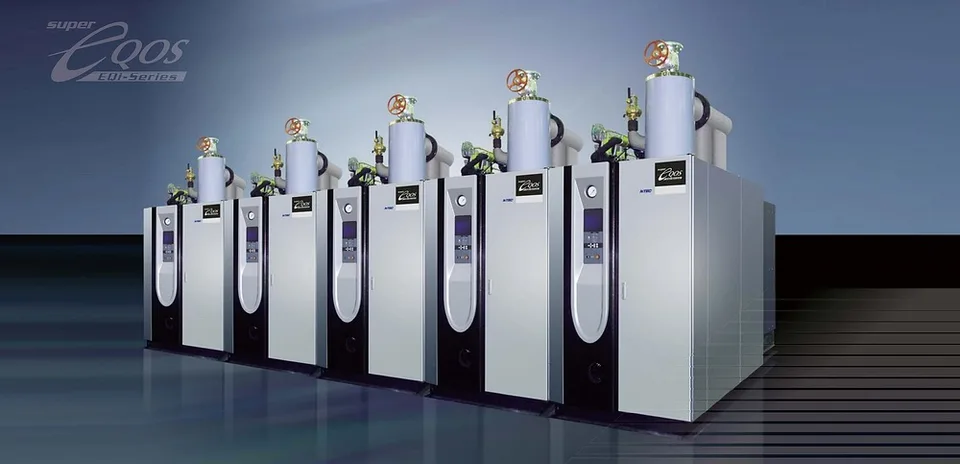
At the operation site of steam boilers, one of the most frequently asked questions is: "How many kilograms should the boiler pressure be set to optimally?" This may seem simple, but it actually involves many aspects such as steam physics, legal restrictions, equipment usage conditions, and safety considerations. This article will take you starting from the principles and step by step to understand the setting logic and practical application of steam pressure through common on-site scenarios.
1. What is steam pressure? It’s not just as simple as hot water turning into steam
Steam pressure simply means the pressure generated when water is heated into steam in a closed boiler. The pressure will affect the steam temperature, and the temperature will directly affect the heat transfer efficiency and processing speed. This is why different industries and different processes have different pressure requirements.
2. Correspondence between pressure and temperature: Just remember this table
Many new customers ask us: "How many kilograms of pressure correspond to how many degrees?" The following table is the most commonly used comparison on our site:
Pressure (kg/cm²)
Steam temperature (℃)
about 100
about 121
About 133
about 152
about 165
10
About 184
If you are doing a process that requires high sterilization and heating speed, then higher pressure can help you save a lot of time. But conversely, the higher the pressure, the higher the risks and costs, which many people ignore.
3. How does the boiler create pressure? It does not rely on gas storage, but generates it instantly
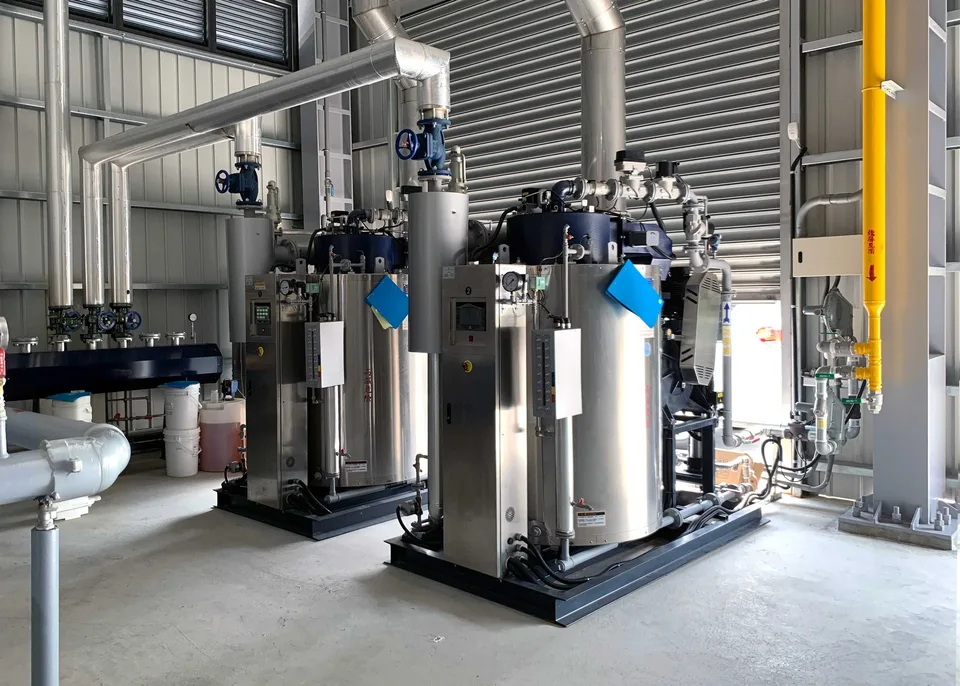
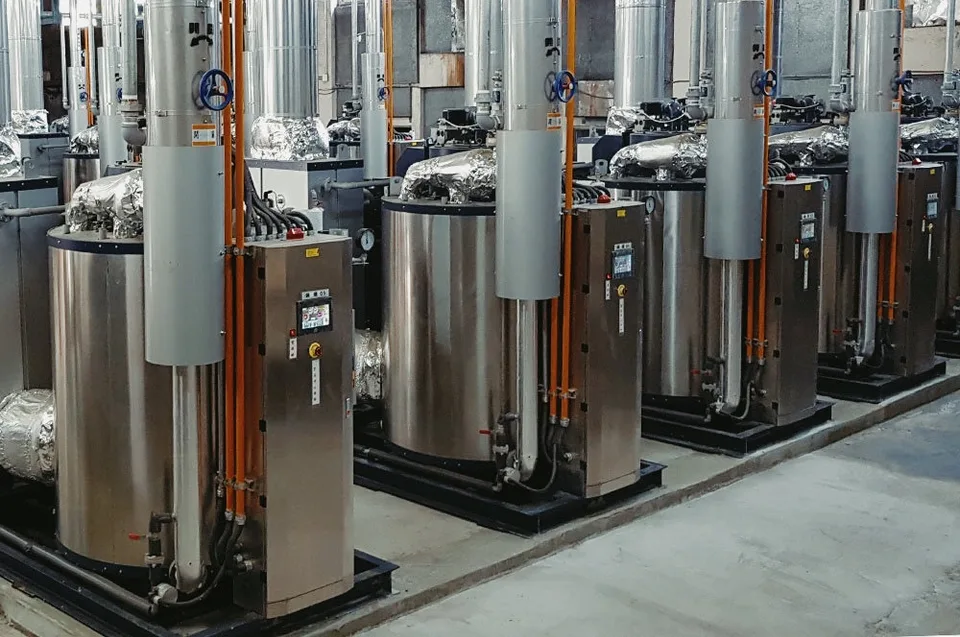
Taking the once-through steam boiler produced by Chuang Ting as an example, its principle is to instantly convert water into steam through the heating tube and generate stable pressure in a short period of time. Unlike traditional large-scale furnaces that rely on steam "accumulation" to increase pressure, once-through boilers produce heat as soon as it is turned on and deliver heat immediately, so the pressure response is faster and the set value is easier to control.
4. Why are most boilers set at 5~7 kg/cm²?
This is the pressure range we most often recommend in the field, for very pragmatic reasons:
- Reaching a high temperature of 150~160°C, the heating efficiency is just right
- Will not exceed the regulatory threshold of 10 kg/cm² (will be discussed later)
- After decompression, it can just supply 1~3 kg/cm² terminal equipment.
- The pressure load of the equipment is moderate, and it is not prone to problems even under long-term operation.
- Save energy
For food processing, washing industry, and biotechnology equipment, this is an empirically proven "golden range."
5. Why do kitchen equipment only use 1~3 kg/cm²?
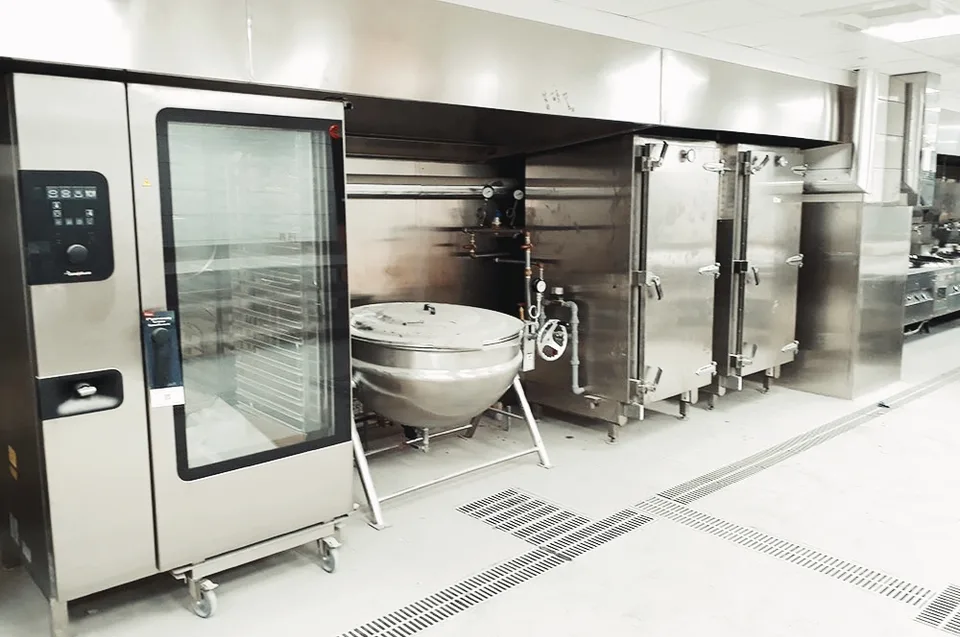
For example, the actual use pressure of rice steaming boxes, steam ovens, rice roll machines, and steaming tables is very low. Reasons include:
- High voltage is not allowed at the operation site: safety considerations come first
- The equipment itself is designed for medium and low voltage, and it cannot be used no matter how high it is.
- The temperature requirements for food processing usually fall between 100 and 130°C
Therefore, we will all recommend: maintain high pressure at the boiler outlet first, and then use the pressure reducing valve to reduce the pressure to supply equipment.
6. Steam pressure reducing valve plays a key role in pressure control
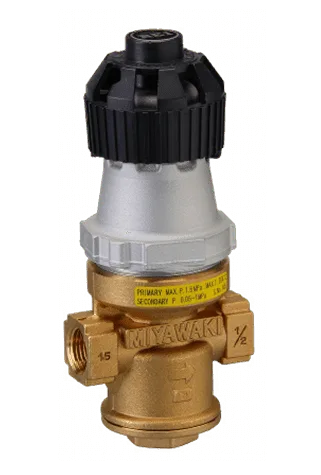
A steam pressure reducing valve is like a pressure conversion station. For example:
- Boiler pressure setting 6 kg/cm²
- Steam pressure reducing valve setting 2 kg/cm²
- The air outlet is supplied to a steam oven or rice steamer, the pressure is stable and safe but not too high.
The pressure reducing valve must be selected with the right flow rate, caliber and response speed. For this part, we usually help customers make on-site suggestions based on the number of equipment and actual usage requirements.
7. Why is our boiler pressure not designed to exceed 10 kg/cm²?
Many people think that high pressure is stronger and better, but this is not the case. If it exceeds 10 kg/cm², it will be classified as a "high-pressure boiler". It not only needs to be declared for inspection, but also requires special design, thick plate welding, and pressure vessel certification. The overall cost, construction difficulty, and safety risks will all increase significantly.
Therefore, our Chuang Ting once-through steam boilers are designed within 9.9 kg/cm², exempt from public inspection, comply with regulations, and meet customer needs.
8. Pressure control safety mechanism: the most important part for on-site maintenance personnel
To use the boiler with peace of mind, these basic designs must include:
- Pressure switch: set the pressure range and automatically switch the burner on and off
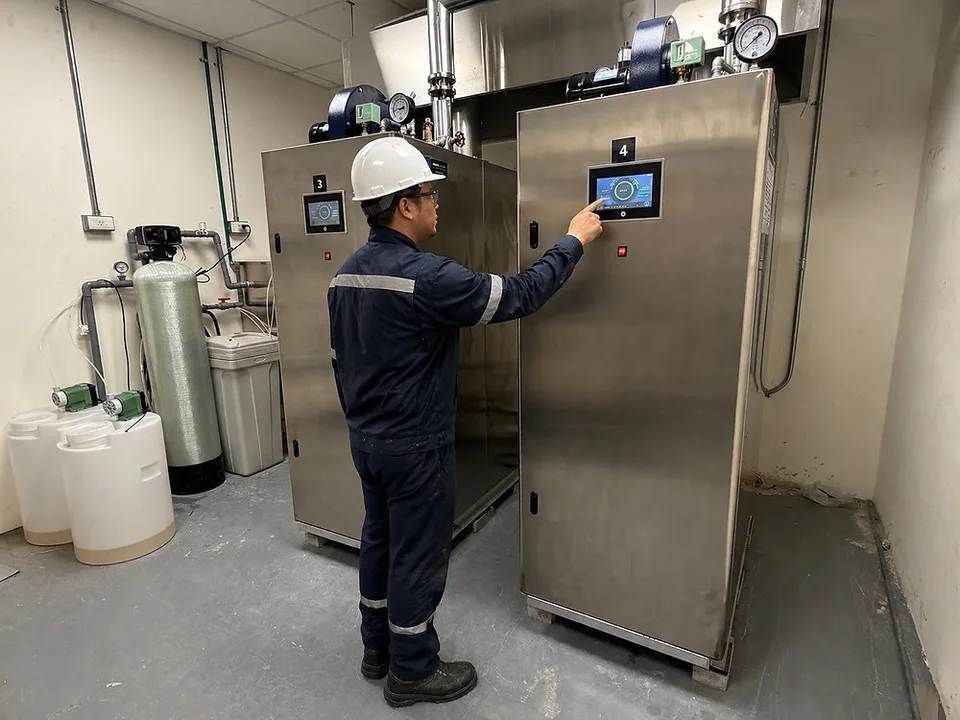
- Pressure gauge: for immediate interpretation by the operator
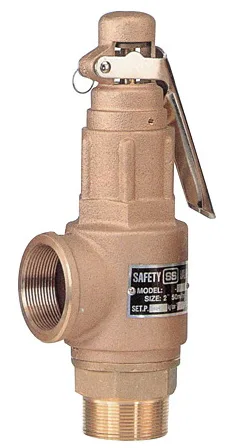
- Safety valve: automatically releases when the pressure is too high
- Exhaust valve/drain valve: Helps remove condensation water and maintain stable pressure
These are the most frequently inspected points at our maintenance sites and are also the basic items for annual security inspections.
9. Practical Cases: Common Pressure Setting Reference Table
Industry
Boiler set pressure
Use end pressure
Remarks
Catering central kitchen
5~7 kg/cm²
1.5~2.5 kg/cm²
Supply steam box, double-layer rotary kettle
food processing plant
7~9 kg/cm²
3~5 kg/cm²
Multiple process switching, large gas consumption
Laundry
5~7 kg/cm²
3~4 kg/cm²
commercial washing machine
Medical/biotechnology factory
7-9 kg/cm²
3~7 kg/cm²
Autoclave or CIP system
10. Pressure setting is not a matter of guessing, it is the result of the overall design.
How many kilograms of steam you use is not just a matter of asking the manufacturer "how much to set." Instead, it must be considered based on the process, pipeline configuration, terminal equipment requirements, and regulations. Every time the Chuang Ting team helps customers design steam systems, pressure setting is the first question asked, and it is also the link that requires the most on-site discussion. If you have questions about pressure setting, insufficient pressure at the end of use, improper selection of pressure reducing valves, etc., please contact our customer service LINE: @n94225087 to contact the engineering team. We will help you diagnose on site and re-plan the optimal pressure range.