Many people think that problems with steam boilers are due to poor equipment quality, insufficient brand, or because engineers did not handle it well. But if you have really seen enough scenes, you will know a cruel fact:
👉 Most boiler problems do not happen later, but are doomed from the beginning.
We have encountered too many cases where the boiler itself had no obvious flaws, the specifications fully met the requirements, and everything even ran normally in the first year. But starting from the second and third years, various conditions began to appear - unstable pressure, abnormal energy consumption, higher frequency of maintenance, and on-site personnel becoming less and less willing to touch the system.
Looking back, the problem is not "what went wrong", but that I chose the wrong direction in the first place.
1. The most common mistake of Taiwanese boilers: only looking at the specifications and not looking at the reality
When choosing a boiler, most discussions revolve around these questions:
- Is the amount of evaporation enough?
- Not under enough design pressure?
- Is it more efficient than others?
- Can the price be lowered?
These are all valid questions, but here’s the thing – they only address half of the risk.
In Taiwan, what really affects the long-term stable operation of a boiler is often not the book specifications, but these things:
- Habits of field operators
- Does the actual load fluctuate for a long time?
- Ability to respond to incidents at night or on holidays
- Is there frequent replacement of people in the factory to take over the equipment?
- Can maintenance personnel arrive at the scene quickly?
- Professional planning skills
If you only use specifications to make a decision, it is easy to choose a solution that is "correct in theory, but not durable in practice."
2. The second mistake: Mistaking "can be installed" as "suitable for long-term use"
We have seen too many boilers, and there is no problem at all in the drawings:
- Just enough space
- Neat pipelines
- All equipment can be installed
But after actual use, I discovered that problems cropped up one after another.
Common situations include:
- In order to squeeze into the space, maintenance lines were sacrificed.
- The pipeline configuration is beautiful, but the condensate drain condition is ignored
- You must be "cautious" during on-site operations. Mistakes will occur as soon as you change people.
For this kind of system, there will be almost no faults found during acceptance, but you will definitely start to make up the money within three years.
👉 Because the starting point of design is "fitting it in", not "whether it can be maintained well".
3. The third mistake: Underestimating the actual cost of "after the accident"
When choosing a boiler, everyone rationally compares:
- initial investment
- brand awareness
- Data on spec sheet
But few people will seriously think about this question:
If something goes wrong tonight, who will come? How long will it take to arrive?
In Taiwan, this issue is more important than many people think.
We have seen many cases where there is nothing wrong with the boiler itself, but as long as adjustments, judgments or temporary conditions are involved, processing speed becomes the key difference. When the equipment is running every day and downtime is a loss, "back-end support capabilities" are often more realistic than brand reputation.
4. Why do many boilers “work fine in the first year, but start to have problems in the third year?”
This is a very typical phenomenon.
First year:
- new equipment
- Factory settings
- Use caution by personnel
Second year:
- Start chasing production capacity
- Usage habits slowly change
Third year:
- Personnel changes
- Increased number of repairs
- Small problems accumulate into big problems
Many systems are not broken due to a certain part, but the overall design does not take into account "people will change and the environment will change."
5. Why do we often “not rush to sell boilers”
Many customers who come to us for the first time will have the same reaction:
- Why do you keep asking for details about the scene?
- Why not just give a standard solution?
- Why are we sometimes advised "don't do this"?
The reason is actually very simple.
We know very well that if a seemingly "relatively economical" plan turns into:
- Frequent maintenance
- High operational risk
- Every incident must be dealt with urgently
The real cost is never the supplier, but the user.
👉 We would rather spend more time discussing it at the beginning than having to make amends later.
6. A truly mature boiler selection requires systematic thinking, not single-point comparison.
A stable steam system is not just the boiler itself, but includes:
- Operation logic
- Accessibility for repairs
- Personnel familiarity
- Future adjustment flexibility
When these factors are considered together, many seemingly "cheap, fast, beautiful" solutions will naturally be eliminated.
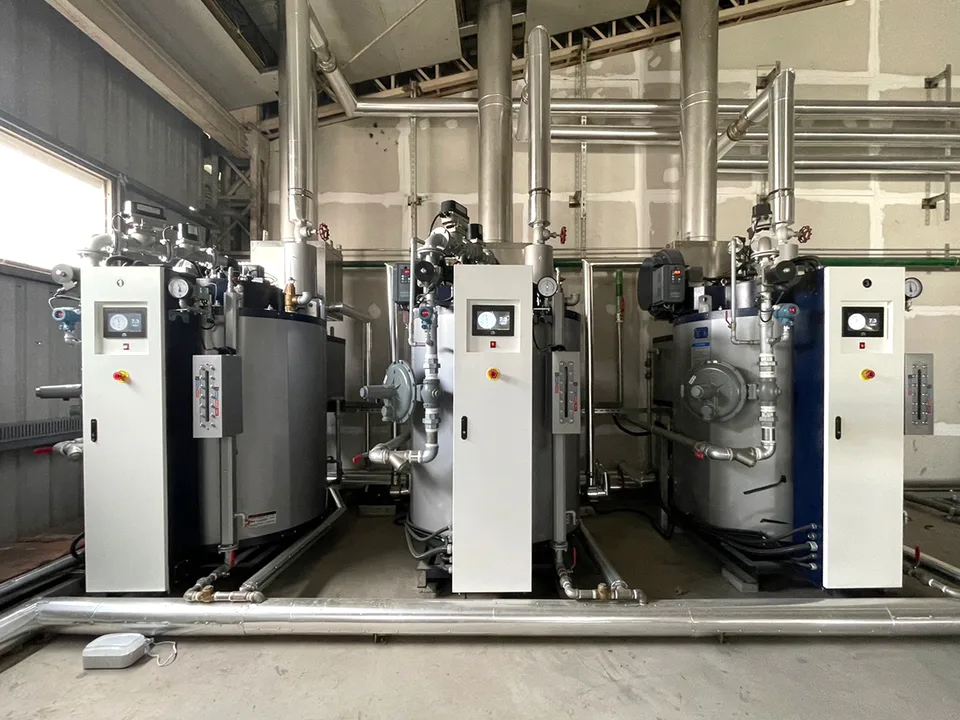
Choosing the right boiler is not to pass the inspection, but to save yourself from trouble.
Steam boilers are not disposable equipment. It operates every day, and problems are often not trivial.
If during the evaluation process, someone is willing to take the time to discuss with you "why not choose this way", or even directly tell you that certain solutions will definitely have problems in the future - it is usually not because he is not good at selling equipment, but because he does not want you to have trouble later.
When choosing a boiler, what you choose is never just the equipment, but a whole set of attitudes towards risks.