Start with your boilers: which qualification do you need?
In Taiwan, the level of qualification a boiler operator needs depends on the boiler's heating surface (under Schedule 11 of Taiwan's Occupational Safety and Health Education and Training Rules):
| Boiler heating surface | Matching boiler operator |
|---|---|
| Under 50 m² | Class C (or higher) |
| 50 m² or more but under 500 m² | Class B (or higher) |
| 500 m² or more | Class A |
Article 14 of Taiwan's Boiler and Pressure Vessel Safety Rules requires employers to hire dedicated operators, who must have passed boiler operator training or the skills test at the matching level or higher. A higher class may operate boilers of a lower class.
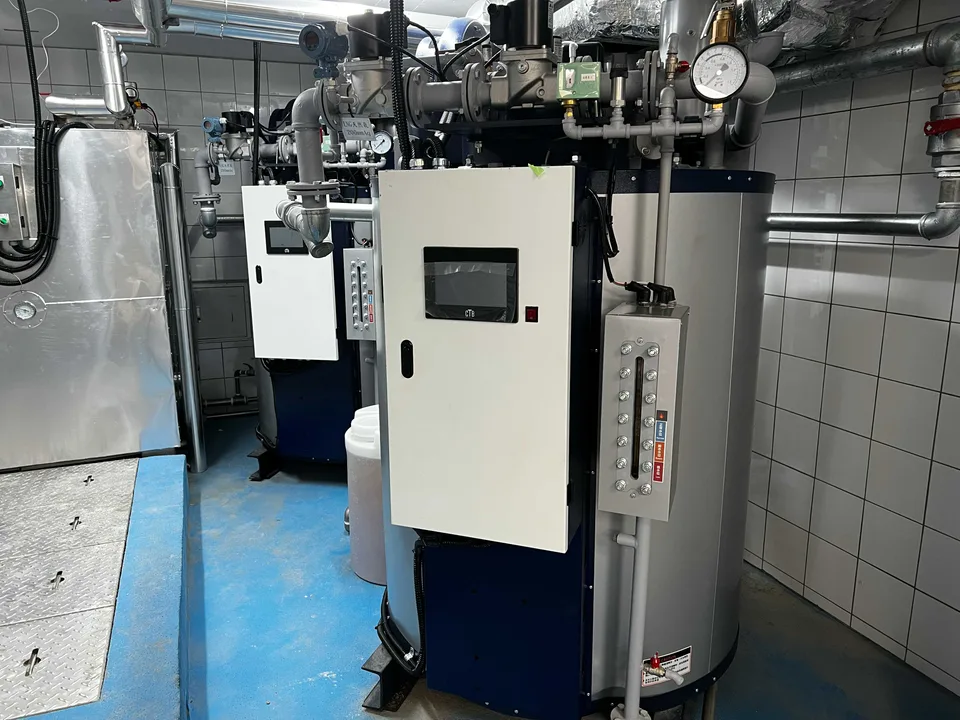
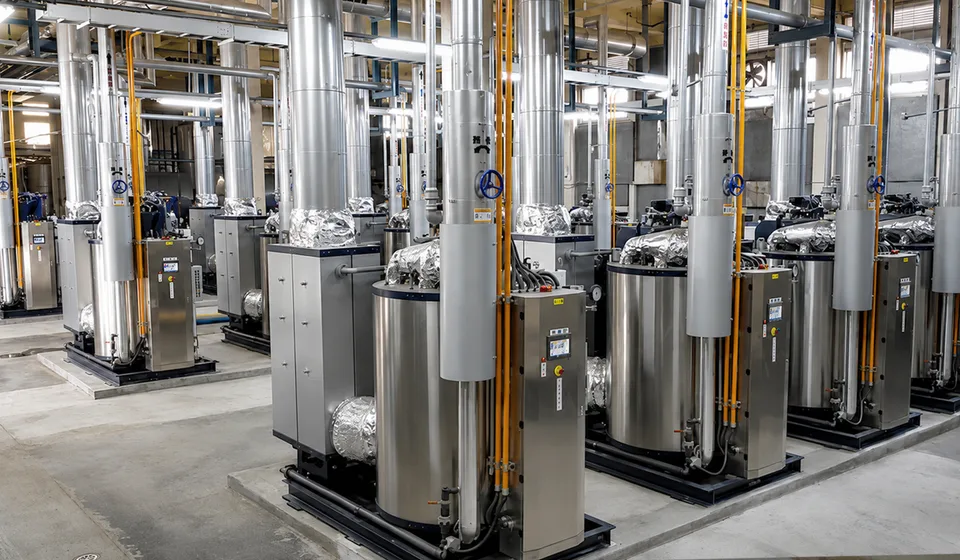
Small once-through boilers follow a different route. A once-through boiler with a maximum working pressure of 10 kg per cm² (1 MPa) or less and a heating surface of 10 m² or less (with further size limits on the header and steam separator) is a "small boiler" under Taiwan's rules. Its operators take the special-operation training for "Small Boiler Operators", not the Class A, B or C boiler operator training. Every Chuang Ting once-through steam boiler has a heating surface of 10 m² or less.
Small Boiler Operator training: 18 hours
Under Schedule 12 of Taiwan's Occupational Safety and Health Education and Training Rules, the course runs 18 hours:
- Regulations for small boilers: 1 hour
- Boiler types and construction: 2 hours
- Boiler auxiliary equipment and accessories: 2 hours
- Boiler water and treatment: 2 hours
- Boiler fuels and combustion: 2 hours
- Boiler self-inspection and accident prevention: 3 hours
- Small boiler safe-operation practice: 6 hours (groups of 15 or fewer, hands-on)
The training provider holds the final test and issues a certificate of completion to those who pass. Fees and course dates are as announced by each training provider. Once operating, staff must take at least 3 hours of in-service training every three years.
Class A, B and C boiler operation: training first, then the technician skills test
In Taiwan, the route to Class A, B or C is "boiler operator training first, then the national technician skills test":
| Class C | Class B | Class A | |
|---|---|---|---|
| Training hours | 39 hours (12 hours of practice) | 50 hours (16 hours of practice) | 50 hours (16 hours of practice, including 6 hours of on-site observation) |
| Who can sit the exam | Aged 18 or over + Class C or higher training | Aged 18 or over + Class B or higher training | Aged 18 or over + Class A training, plus one of: a Class B technician certificate, completed Class B training, or 800 hours or more of Class A practical operation (certified by the employer) |
| Written test | 80 single-choice questions, 100 minutes | 60 single-choice + 20 multiple-choice questions, 100 minutes | Computer-based test |
| Practical test | Five hands-on stations, 50 minutes; total score 60 or more | Five hands-on stations, 50 minutes; no station below 40%, total score 60 or more | Simulator test, on the same day as the written test |
Class B does not require a Class C certificate first, and there is no education or experience requirement: anyone aged 18 or over who has completed Class B or higher training can apply. Candidates must pass both the written and the practical test to pass.
The practical test has five stations: pre-start inspection, start-up (manual ignition), raising pressure, operation, and shutdown. Some mistakes mean an instant fail, for example: lighting the burner without first purging the furnace, opening the fuel valve before ignition, or repeated failed ignition (the third attempt for Class C, the second for Class B).
Are the exams hard? The official pass rates
Figures published by Taiwan's Skills Evaluation Center (number passed ÷ number who sat the test, by year of certification):
| Year | Class B | Class A (simulator) | Class C |
|---|---|---|---|
| 2023 (ROC year 112) | 65.0%(906/1,393) | 60.5%(239/395) | 64.7%(33/51) |
| 2024 (ROC year 113) | 60.2%(789/1,310) | 66.5%(260/391) | 2 took the test, 2 passed |
| 2025 (ROC year 114) | 59.3%(781/1,317) | 67.7%(260/384) | 13/19 |
| 2026 (ROC year 115, January–October) | 63.2%(596/943) | 65.0%(217/334) | 1 took the test, 1 passed |
Roughly 6 in every 10 candidates who sit the test pass. Since Class A switched to a simulator test, its pass rate has risen from just over 10% in the old written-exam days to over 60%. In recent years few people take Class C; most go straight to Class B.
Two or more boilers: a boiler work supervisor is also required
Where one boiler room or installation site has two or more boilers, the employer must appoint a boiler work supervisor (Article 15 of Taiwan's Boiler and Pressure Vessel Safety Rules). The qualification depends on the combined heating surface of all the boilers:
- 500 m² or more in total: Class A; if every boiler is once-through, Class B or higher is enough.
- 50 m² or more but under 500 m²: Class B or higher; if every boiler is once-through, Class C or higher is enough.
- Under 50 m²: Class C or higher.
When adding up, the heating surface of a once-through boiler may be counted at one tenth, and that of a boiler with an automatic safety shutdown device at one fifth.
How should a factory prepare?
- First check each boiler's type, maximum working pressure and heating surface (on the nameplate or in the manufacturer's documents).
- Small once-through boilers: send the staff who actually operate them to Small Boiler Operator training, and remember the in-service training every three years.
- Class A, B and C boilers: arrange training and the skills test at the level matching the heating surface; with two or more boilers, also check the work supervisor's qualification.
- If you are unsure, check with the labor inspection authority or the designated inspection agency. At handover, Chuang Ting provides the specifications of every boiler to help you decide.
References
- Taiwan's Laws & Regulations Database: Boiler and Pressure Vessel Safety Rules (amended 2014-07-01), Articles 3, 7, 14 and 15; Occupational Safety and Health Education and Training Rules (amended 2026-06-25), Articles 13, 14, 18 and 19 and Schedules 11 and 12; Regulations Governing Technician Skills Testing and Certification, Article 10.
- Taiwan's Ministry of Labor, 2014-11-20: eligibility to apply for the boiler operation skills test.
- Taiwan's Skills Evaluation Center: Boiler Operation Skills Test Specification (2016-08-15), reference material for Class B and C practical-test candidates (2023-03-30), the 2026 national technician skills test guide, and statistics on applicants, candidates and passes for 2011–2026.