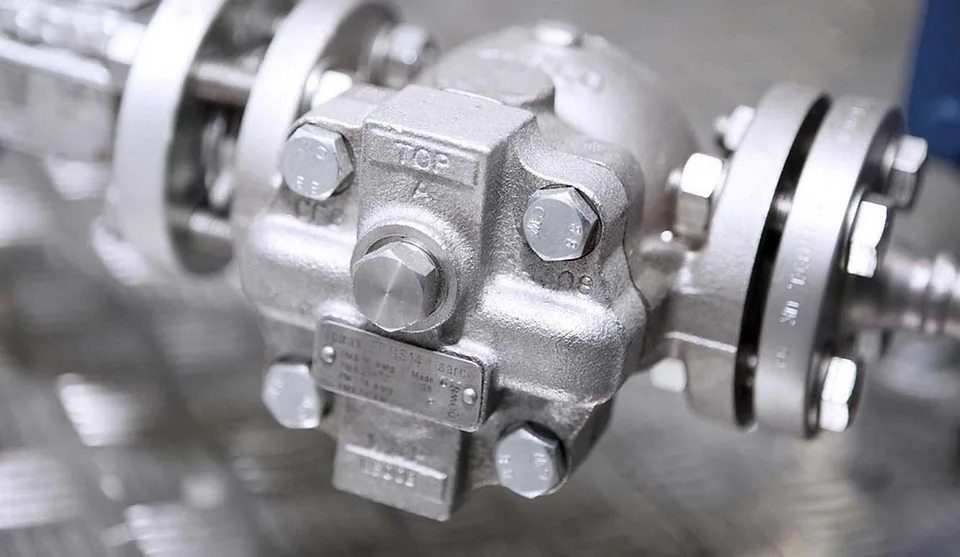
In the steam system, there is a component that is so small that it is often overlooked, but its importance directly affects the quality, energy consumption, and safety of the entire set of steam. It is the steam trap. You can't see it running, but it has been silently draining condensed water, air, and non-condensable gas. If installed in the wrong location, with the wrong model, or with insufficient maintenance, problems will follow:
- water hammer
- wet steam
- unstable pressure
- Increased energy consumption
- The efficiency of the entire system decreases
- The pressure reducing valve was blown back by condensate water.
This article integrates foreign standards + actual factory experience + Chuang Ting on-site logic to write a "Complete Guide to Installing Water Deflectors" that you can really use.
1. Where should the water drainer be installed on the main steam line? (These are the three most basic laws)
When steam is transported in the main line, it is cooled and condensed water is generated along the way, so it must be continuously drained at the correct location. The following three are the basic principles that any factory should abide by:
Place a water trap every 30 meters
The reason is simple: after the steam travels 30 meters, the amount of condensed water will accumulate to a level that is "enough to cause water hammer."
Not draining → water pockets are formed → water hammer hits the flange gasket and flies out.
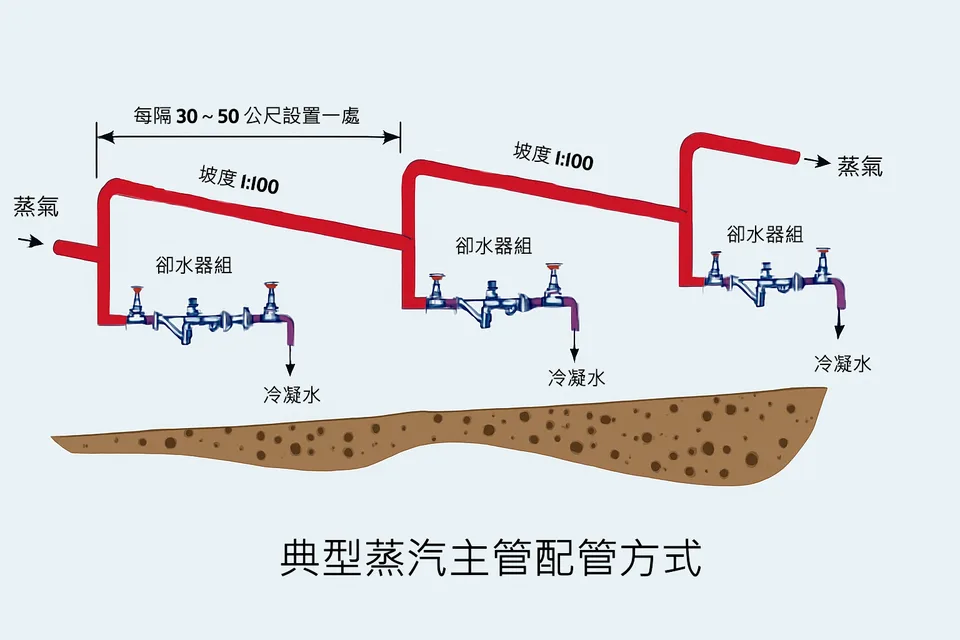
Be sure to place it where there is a height difference
Once the pipeline "goes down", water will accumulate at that low point. Leaving the drain in place is the most common source of water hammer.
Dead End must be installed
The steam movement speed at the dead end is the slowest and the condensation water deposits the fastest. Ignoring dead-end drainage is the main reason for poor steam quality and low machine efficiency in many factories.
2. Explain the three common types of water drains in main lines at once
(Inverted bucket type, float type, thermal type)
You have to choose the right model to know where to put it and why it might cause problems. The following are the three types of water dampers most commonly encountered on site.
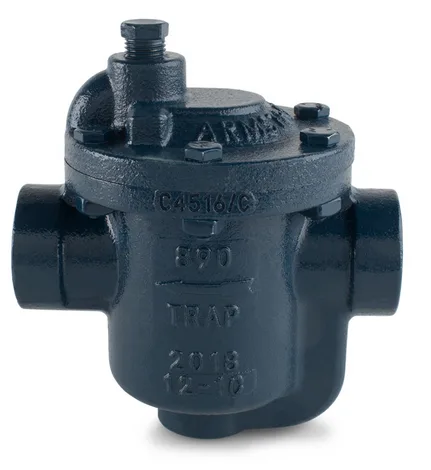
Inverted Bucket
— Durable type, weak air exhausting ability**
It relies on buoyancy to control the switch, and the structure is very hardcore.
Advantages
- Very resistant to dirt and impurities
- Not easy to break
- Extremely resistant to water hammer
- Suitable for high pressure pipelines
Disadvantages
- Air exhaust speed is slow
- Weak ability to adapt to load changes
- Not suitable for equipment that changes a lot and requires quick response
Applicable fields
- General factory
- Areas with higher pressure and more impurities
- Drainage points that value durability
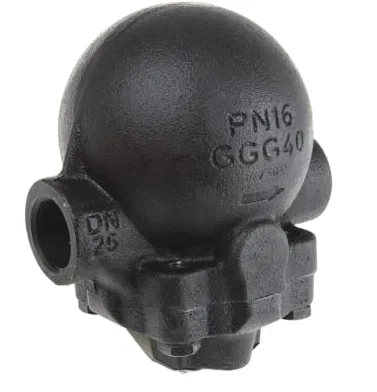
Float type (Free Float / Float & Thermostatic)
— The smoothest, quietest and most suitable for trunk lines**
The float type is characterized by continuous discharge of condensate water and extremely low steam loss.
Advantages
- Continuous drainage (most needed for main lines)
- Exhaust air quickly
- Sensitive response to changes in condensate volume
- Quiet movements
Disadvantages
- Requires very clean steam (filter must be installed)
- The price is relatively high
Applicable fields
- Steam Mainline (most recommended)
- Moisture separator outlet
- Factories with high food, medical and process requirements
In a word: the main line must be stable and dry, and the float type is the safest.
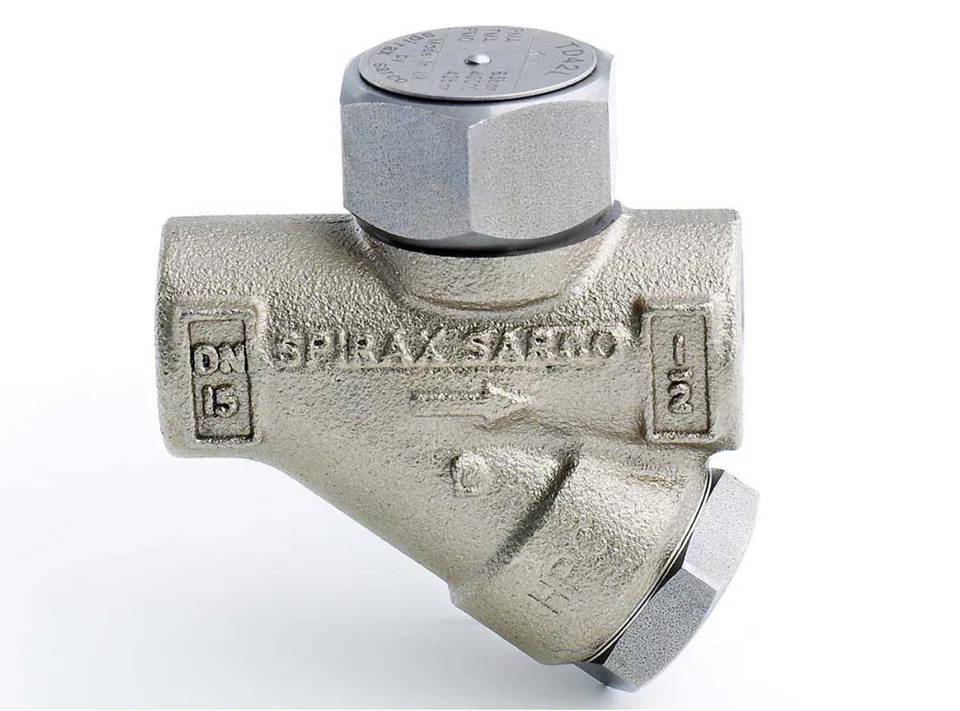
Thermodynamic
— Small ones are cheap and fast, but not suitable for main lines**
Operates on steam velocity and pressure differences.
Advantages
- Small size, super space saving
- cheap price
- Easy to repair
Disadvantages
- Unable to continuously drain condensate → easy to cause water accumulation in the main line
- Very noisy
- Easily affected by environment, low temperature and rain
- Frequent movement and quick wear
Applicable fields
- Steam branch line
- non-critical drainage points
- Small device with little space
Not applicable
- Steam main line (the most common mistake made by many factories)
3. Should the water drain be installed on a high place or on the ground? The real answer is: The right location is only one that can be repaired
Many people think that it is better to install it on the main pipe, because the downpipe is short and there is less heat loss. This is true, but only half true.
What really needs to be considered is:
Can it be repaired? Can engineers see and touch it?
Here is the most realistic conclusion:
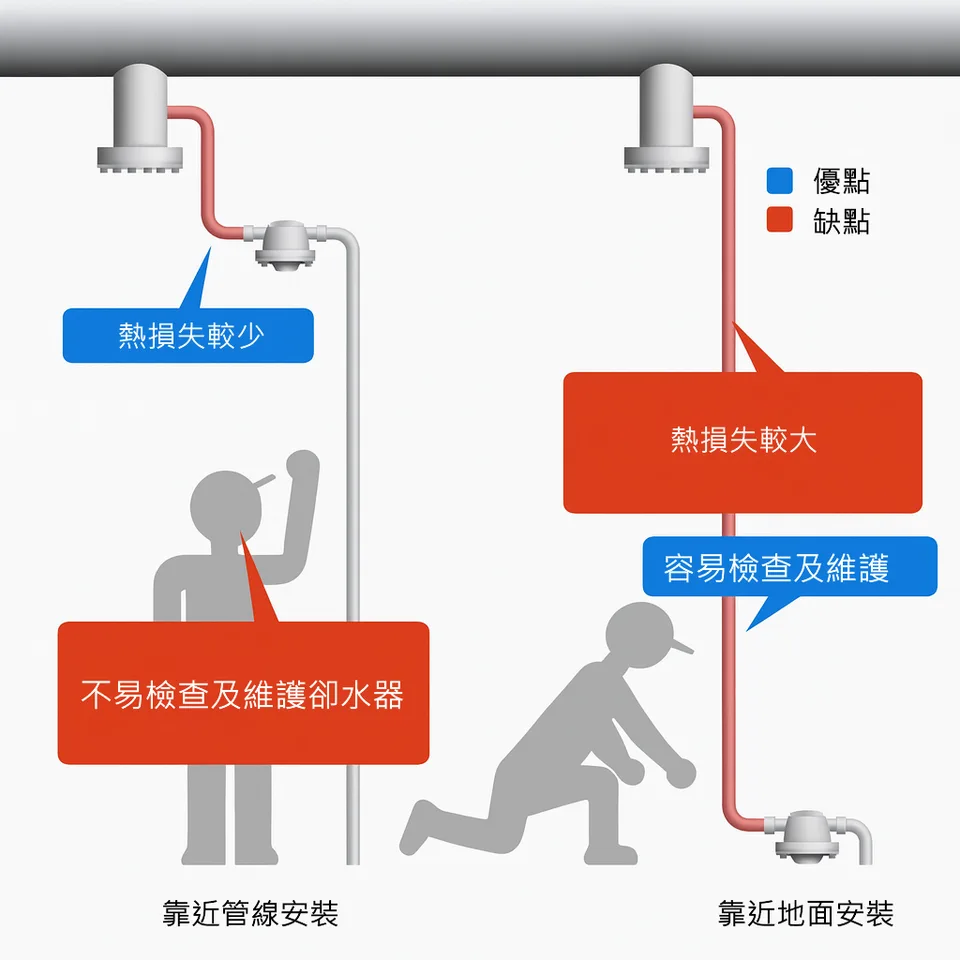
Installation at high location (near the main pipe)
Advantages
- Minimal heat loss
Disadvantages
- Difficulty in maintenance (especially in factories without platforms)
- The failure rate is high but no one will notice it
- Once bad, it will be bad for three years
What situations are appropriate?
There are platforms, walkways and fixed ladders next to the main pipe.
No? Not recommended.
Ground (lower) installation
Advantages
- Very easy to maintain
- See the situation clearly
- Fast fault response
- High security
Disadvantages
- The downpipe becomes longer and the radiant heat loss is slightly higher (but there is no difference if the insulation is good)
The most practical conclusion
For factories without a platform, the water deflector must be placed on the ground.
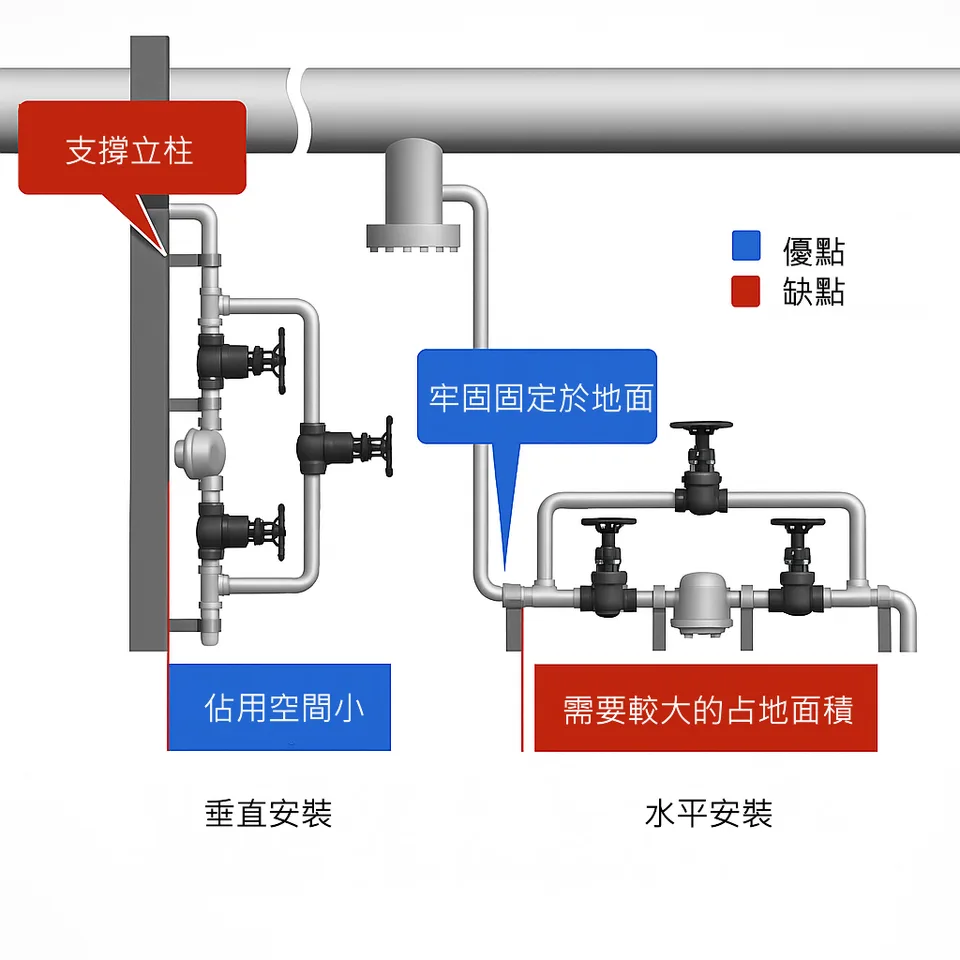
4. Vertical installation vs horizontal installation? Which one is best?
In fact, both are correct, but the applicable scenarios are different.
Vertical installation (hanging on riser)
Advantages
- Save space
- Suitable for dense pipelines
Disadvantages
- Requires pillar or wall support
- Maintenance difficulty is not necessarily low
- Poor fixation will cause vibration problems
Horizontal installation (close to the ground)
Advantages
- The most convenient maintenance
- Fixed is best
- most stable
Disadvantages
- Need more space
Practical conclusions
When there is enough space on site → the level is best. If the pipeline is crowded and there is no space → use vertical pipes.
5. Where should a water trap be installed? (Many factories often miss it)
Steam distribution tank
The steam distribution tank is where the steam velocity decreases → the water separation effect is the best. But many factories did not release them at all.
Result: The entire plant uses wet steam, with 20–30% less thermal efficiency.
In front of pressure reducing valve/control valve/manual valve
After the steam is turned off, water will accumulate in the front section of the pipeline. The next time the steam is turned on the entire package of condensate will rush into the pressure reducing valve. This is where water hammer comes from.
Therefore: the water cooler must be placed before entering the equipment.
Next to the Moisture Separator
The separator is only responsible for throwing away water droplets and will not automatically drain water. Drainage depends on the water drain.
The two must be tied together.
6. Why is the installation of water drain device more important than the selection?
Many people think that buying the most expensive and best foreign models will improve steam quality. wrong!
A good drainer installed in the wrong position = the same as using the worst one.
The steam is wet, the efficiency is low, the water hammer is constant, the pressure is unstable, and finally the boiler is not powerful enough.
The real deciding point is:
- location
- Pipe diameter
- height
- Insulation
- Can it be repaired?
- Air exhaust capacity
- Condensate return path
When everything is in place, your steam can be truly "dry, stable and economical".
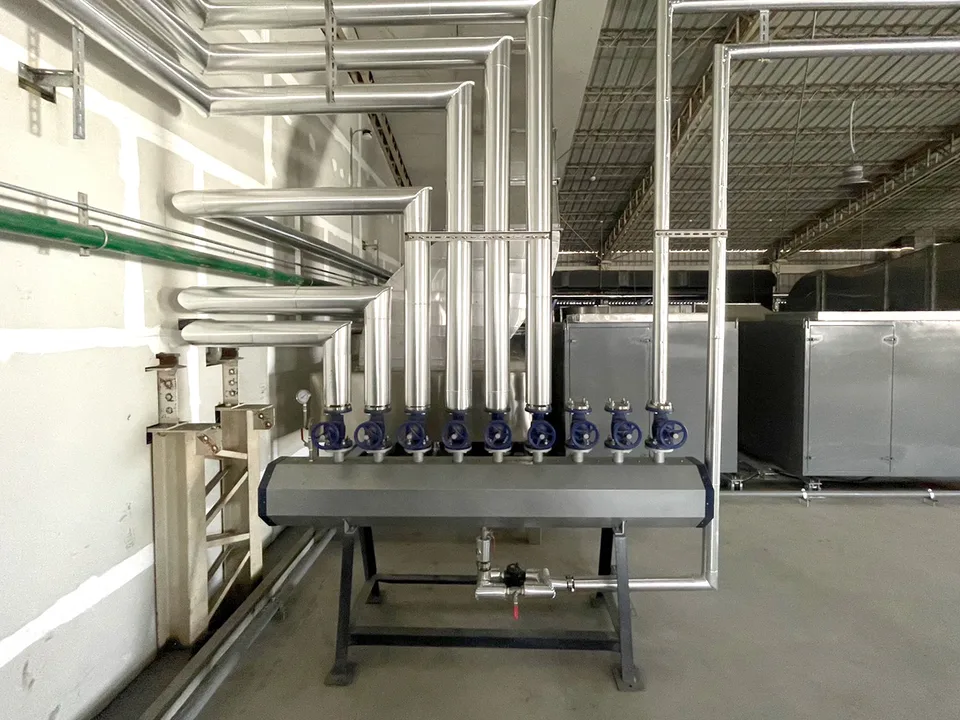
The water trap is the key to the steam quality of the entire plant, not a small part
If you treat it like a drainage gadget, you'll never get true steam efficiency. But if you think of it as:
Core engineering projects to make steam dry, efficient, stabilize pressure, reduce energy consumption, and protect equipment life
The quality of your factory steam will be completely different.
If you want to:
- Find out where in your facility you need makeup water
- Planning steam main line drainage points
- Solve the problems of wet steam, unstable pressure and water hammer
Please contact Chuang Ting engineers in each region directly to assist you in evaluating your planning!