When a factory prepares to add or replace a steam boiler, it often encounters a problem:
Should you choose a once-through steam boiler or a traditional large horizontal boiler?
In the past, many factories used to use large horizontal boilers because a single boiler has a large evaporation capacity and a large water storage capacity. It can continuously supply a large amount of steam when the steam demand is stable for a long time.
But now more and more food factories, central kitchens, biopharmaceutical factories, restaurants, hospitals and general manufacturing plants are beginning to use multiple once-through steam boilers in parallel.
The reason is not only that once-through boilers are smaller in size, but more importantly, startup speed, operating manpower, regulatory management, backup capabilities and long-term costs may all be more in line with the needs of modern factories than traditional large horizontal boilers.
When actually choosing a boiler, you can't just look at the evaporation capacity of a single unit, nor can you just compare equipment quotations.
What the factory really has to calculate is the total cost over the next decade or so.
This includes fuel, operators, licenses, shifts, regular inspections, maintenance, downtime risk and future expansion costs.
What is a once-through steam boiler?
The operation method of a once-through steam boiler is to allow the feed water to continuously flow through the internal water pipes of the boiler. During the flow, the water quickly absorbs the heat energy generated by combustion and converts it into steam in a short time.
Since the amount of water stored inside the once-through boiler is small, there is no need to heat all the large amounts of boiler water first, so the steam supply can be started in a shorter period of time.
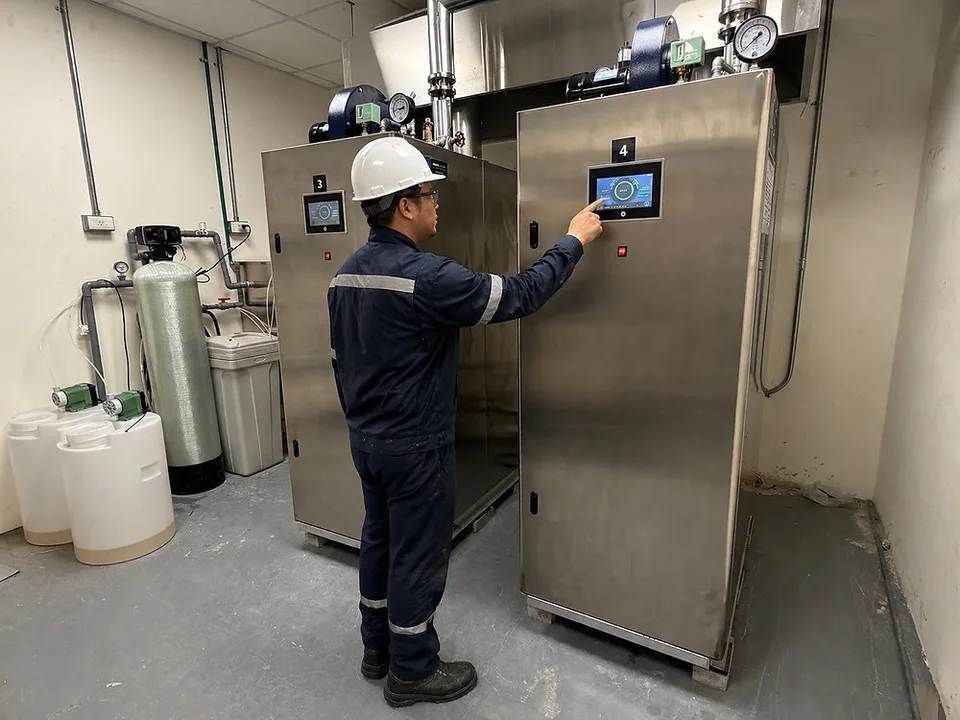
Taking the Chuang Ting once-through steam boiler as an example, depending on the equipment model, operating pressure and site conditions, steam can usually be supplied within a few minutes after startup.
For factories that need to start up and shut down every day, or whose steam consumption changes significantly, quick start can reduce waiting time and reduce preheating energy consumption before formal production.
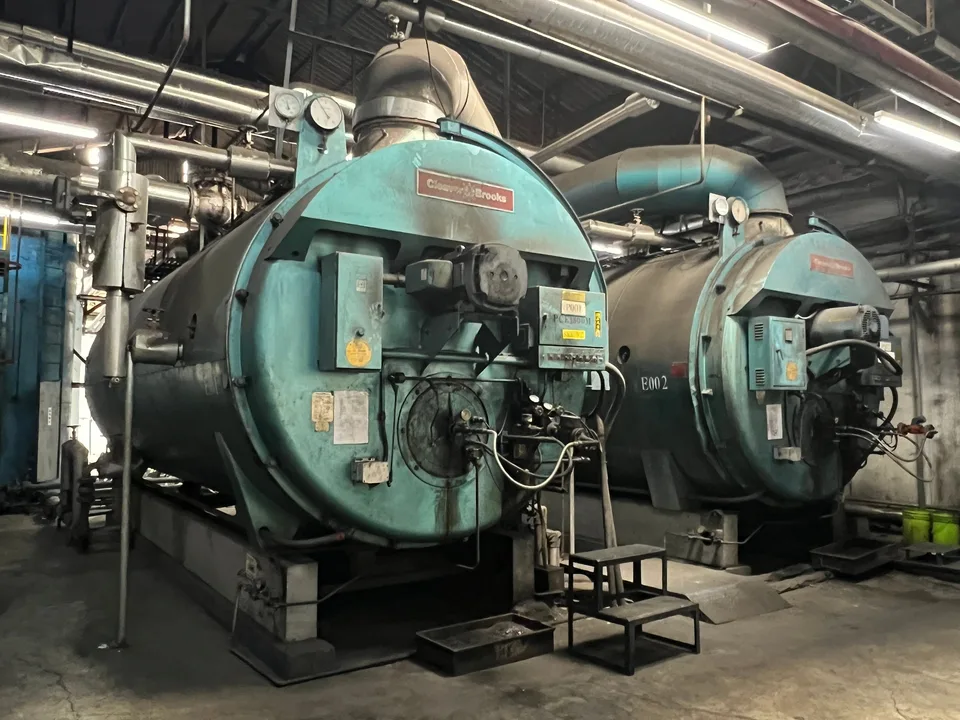
What is a large horizontal boiler?
The body of large horizontal boilers usually adopts a horizontal design and has a large water storage space inside. Common types include horizontal smoke tube boilers and other large industrial steam boilers.
This type of boiler usually has a high steam production capacity per unit and is suitable for large factories that maintain high loads for a long time and have relatively stable steam demand.
The advantage of a large horizontal boiler is that it stores more water and steam inside the boiler, and can provide a relatively stable steam supply when the steam consumption is stable.
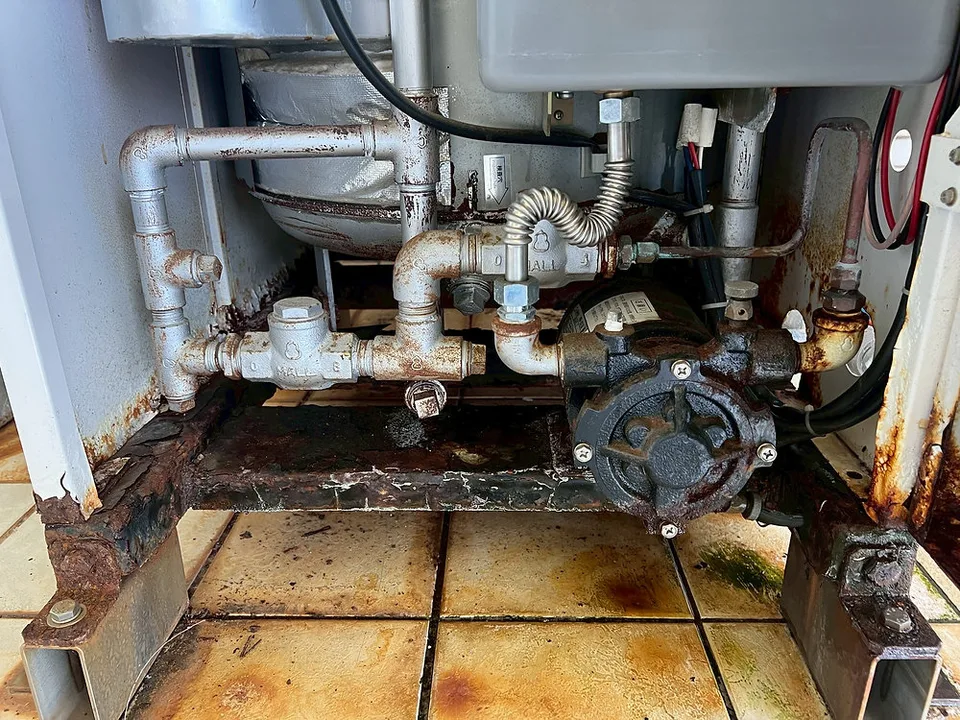
However, because there is a large amount of internal water, it takes a long time to heat a large amount of boiler water to working pressure when starting from a cold machine. In addition to taking longer to start up, large horizontal boilers are usually more complex than once-through boilers in terms of boiler room space, operating licenses, regular inspections, daily management and manpower arrangements.
1. Large horizontal boilers require qualified operators
One of the biggest differences between large horizontal boilers and small once-through boilers is operator qualifications and management costs.
According to relevant boiler safety regulations in Taiwan, boiler operations must be equipped with qualified operators based on the type of equipment, heat transfer area and number of installations.
In the same boiler room or the same installation site, when the total heat transfer area of the boiler is more than 50 square meters and less than 500 square meters, in principle, a person with a Grade B or above boiler operator qualification should be assigned as the boiler operation supervisor; if the total heat transfer area is more than 500 square meters, in principle, a Grade A boiler operator qualification is required.
Therefore, medium and large horizontal boilers that are common on the market often require personnel with Class B boiler operating qualifications.
This is not just about asking ordinary employees to look at the pressure gauge and press the switch.
Operators must receive relevant training and obtain required qualifications, and are responsible for boiler startup, combustion status, water level, pressure, safety devices, emissions and abnormal handling, etc. Employers should also hire full-time operators for boiler operation management.
For enterprises, this means that after purchasing a large horizontal boiler, it not only adds a piece of equipment, but also increases long-term personnel management responsibilities.
2. 24-hour operation, need to arrange shift personnel
If the plant only operates eight hours a day, at least qualified personnel need to be responsible for the operation and management of the boiler during operation.
If the factory operates in two shifts, three shifts, or even 24 hours of continuous production, it cannot only arrange for one boiler operator to be on duty for a long time.
In actual management, it is usually necessary to configure multiple qualified personnel for shifts to cover normal shifts, night shifts, vacations, leaves of absence, and personnel resignations.
In other words, for large horizontal boilers that operate 24 hours a day, companies need to consider not just the salary of the operators, but a whole set of shift manpower.
These may include:
Boiler operator salaries, night shift allowances, overtime pay, labor health insurance, vacation agency manpower, education and training expenses, and the cost of re-recruiting personnel after they leave.
If the factory is located in a remote location, or there are not many local personnel with Class B boiler qualifications, recruitment difficulty and salary conditions may further increase.
These expenses continue to occur every month, and are labor costs that must be borne during the ten or fifteen years of the equipment's use.
Therefore, even if the equipment price of large horizontal boilers seems competitive, the subsequent long-term operating manpower cannot be ignored.
3. Comparison of startup speed and preheating energy consumption
Cross flow steam boiler
There is less water inside the once-through boiler, so it can quickly increase the pressure and start supplying steam quickly.
This feature is particularly suitable for factories with fixed start-ups and shutdowns every day, such as food processing plants, central kitchens, school kitchens, laundry plants and general manufacturing industries.
The factory does not need to start up far in advance, nor does it need to continuously burn fuel to preheat large amounts of boiler water before formal production.
Large horizontal boiler
Large horizontal boilers have a large internal water storage capacity. When starting the cold machine, a large amount of boiler water needs to be heated first.
Therefore, operators often must warm and boost the furnace early and wait until the boiler reaches normal operating pressure before the production equipment can start using steam.
If the factory itself is in 24-hour continuous production, the start-up time of a large horizontal boiler will be less important.
But if it needs to be started and stopped every day, the energy consumption of waiting for startup and preheating will become a long-term cost.
4. Boiler room space comparison
Large horizontal boilers are longer and heavier. In addition to the equipment body, they also need to reserve space for operation, inspection, cleaning, pipe extraction, maintenance and escape.
Boiler foundations, water softening equipment, feed tanks, fuel lines, chimneys, steam mains, exhaust systems and maintenance access must also be planned on site.
If it is a new factory, space can be reserved from the architectural design stage.
However, if you are replacing a boiler in an existing factory, you must also consider whether the large horizontal boiler can be transported from the factory entrance, whether it requires wall demolition, hoisting, or even new foundations.
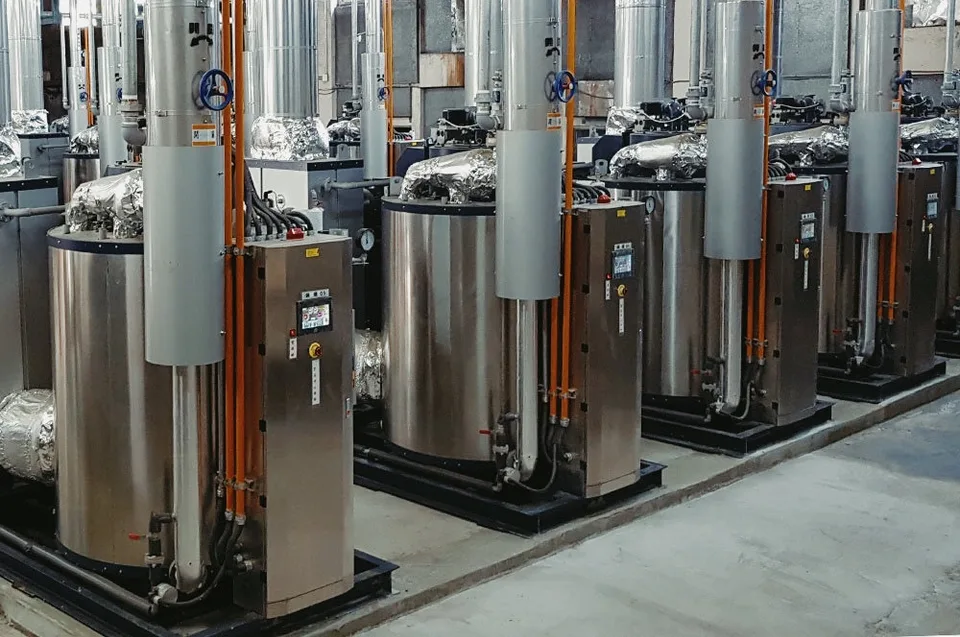
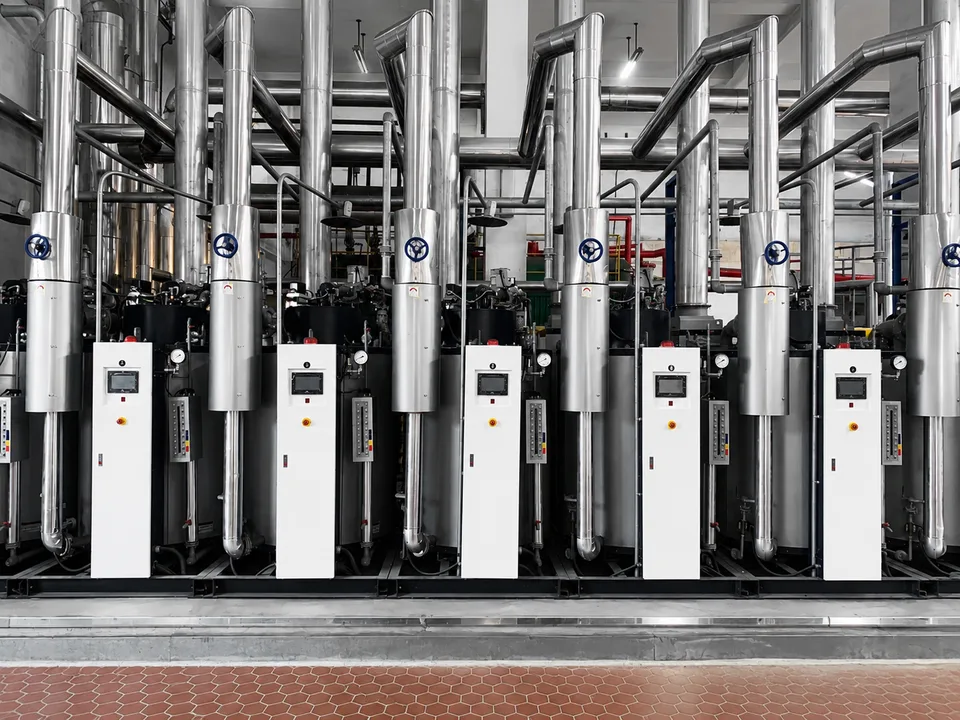
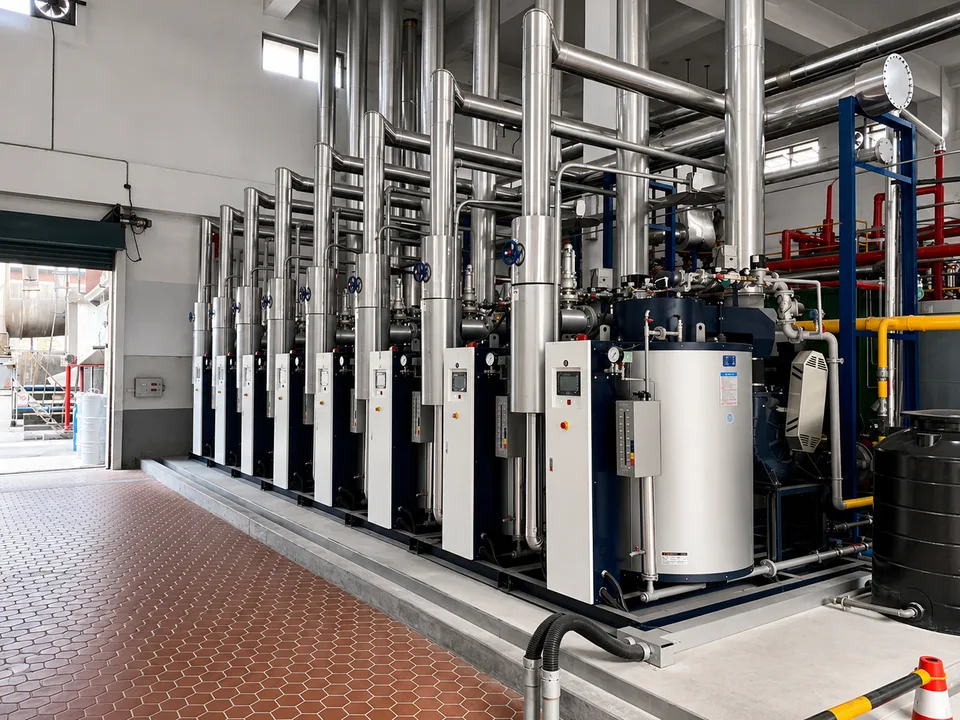
Once-through boilers usually adopt an upright and compact design, occupying a small area, and multiple devices can be arranged according to site conditions.
For factories with limited boiler room space, once-through boilers are usually more flexible in configuration.
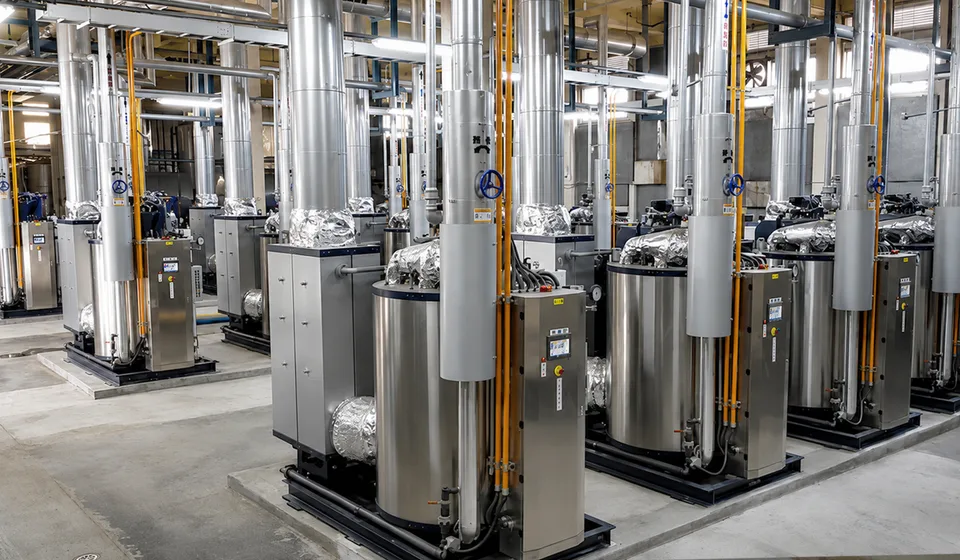
5. Multiple units can be connected in parallel, and the number of operating units can be adjusted according to needs.
A plant's steam requirements are usually not constant.
For example, a food factory may suddenly require a large amount of steam during cooking, sterilization or cleaning; after the process is completed, the steam consumption will drop rapidly.
If only one large horizontal boiler is configured, even if only a part of the steam is needed at the moment, the entire large boiler still needs to be kept running.
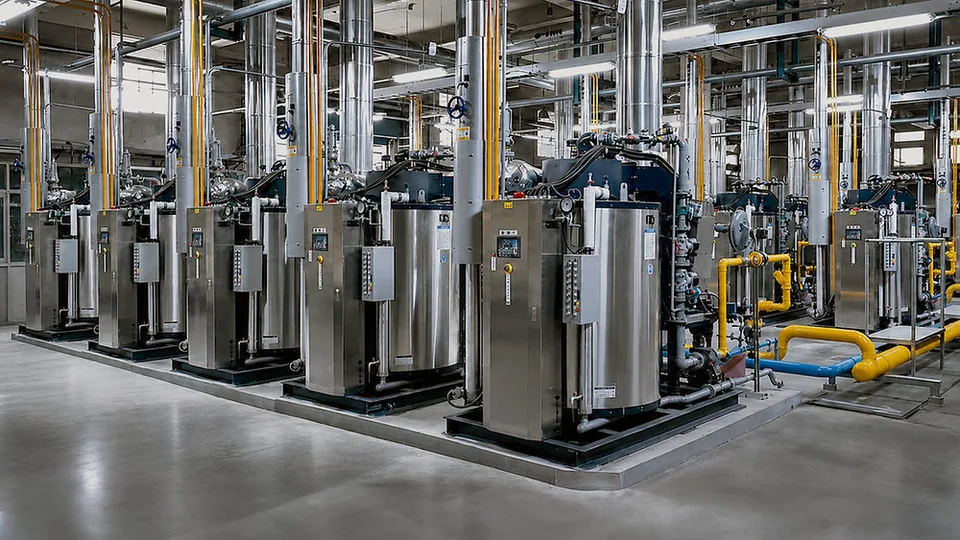
Once-through boilers can be connected in parallel.
For example, the factory is equipped with three once-through boilers:
One unit is started during low load; two units are started during general production; three units are operated at the same time during peak demand.
The factory can adjust the number of units started based on actual steam consumption to avoid using an oversized boiler to operate at low load for a long time.
When production capacity increases in the future, boilers can also be added depending on the site space and system design. There is no need to purchase large equipment that is much higher than the current demand from the beginning.
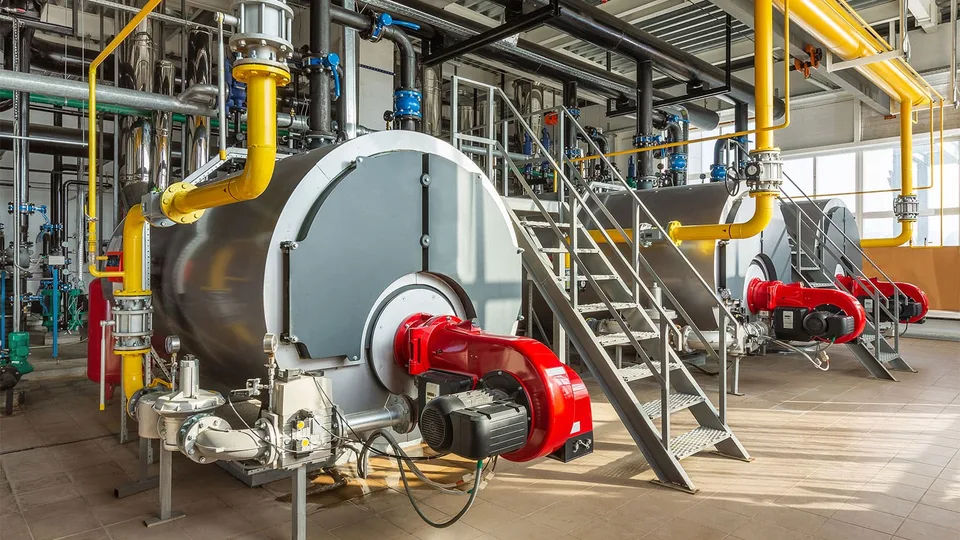
6. The risk of shutdown of a single large horizontal boiler is relatively concentrated
If the entire plant's steam is supplied by only one large horizontal boiler, the entire plant may lose steam immediately if regular inspections, internal cleaning, burner repairs, or temporary failures are required.
For food factories, pharmaceutical factories, central kitchens, hospitals and continuous production plants, the most expensive thing is often not the maintenance cost, but the loss of production.
These may include:
Scraping of raw materials, production line shutdown, delayed delivery, staff waiting for work, re-cleaning of process equipment, and liability for breach of contract to customers.
When multiple once-through boilers are connected in parallel, backup capabilities can be established.
For example, of three boilers, only two are needed to supply normal production capacity, and the other is used as backup or peak support. When one of the units undergoes maintenance or malfunctions, the remaining equipment can continue to supply some steam, reducing the risk of a complete shutdown of the entire plant.
7. Regular inspection and management costs
If a large horizontal boiler is a hazardous equipment stipulated in regulations, it must undergo relevant inspections in accordance with the law. It cannot be used unless it passes the inspection.
In addition to regular inspections, public institutions also need to conduct daily and monthly independent inspections, keep records, and arrange for qualified personnel to be responsible for operation and management. Official occupational safety and health management guidance materials also list regular boiler inspections and monthly automatic inspections as management items.
The cost of managing a large horizontal boiler is therefore more than just a receipt for inspection fees.
Enterprises also need to cooperate with shutdown, furnace cleaning, opening inspection, equipment sorting, defect improvement and restart.
If the inspection time conflicts with the factory production schedule, it may also affect normal production.
Some Chuang Ting once-through steam boilers can reduce the burden of public inspection, operating qualifications and manpower allocation on traditional large horizontal boilers through smaller heat transfer areas and equipment design.
However, whether the actual exemption from public inspection and the qualifications required by the operator should still be confirmed based on the equipment model, pressure, heat transfer area, quantity and on-site configuration. You cannot just use "license exemption" to summarize all situations.
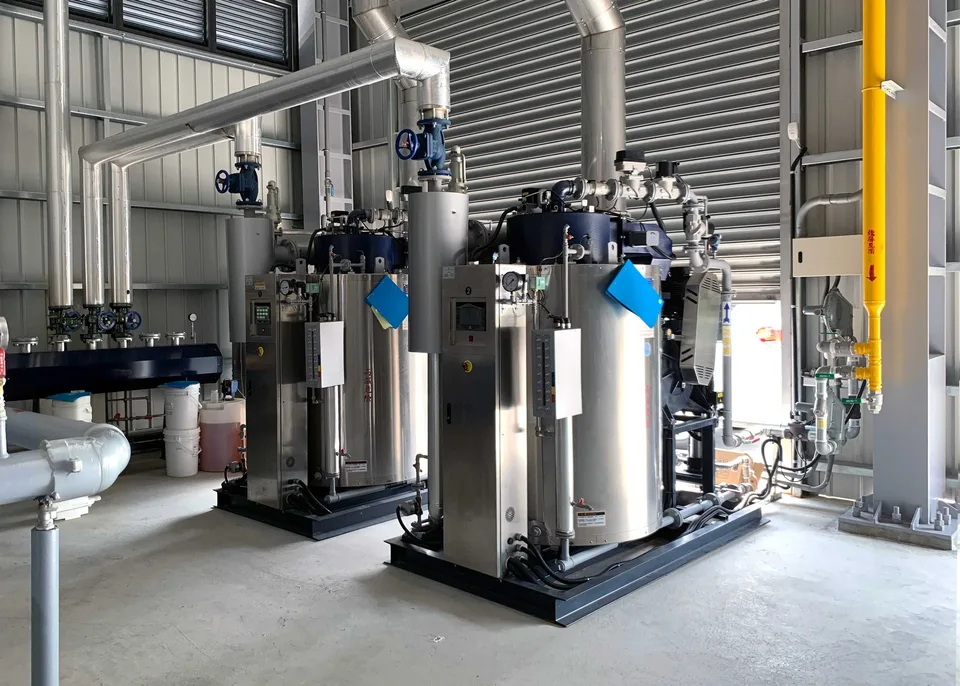
Which factories are once-through steam boilers suitable for?
The following situations are usually suitable for priority evaluation of once-through steam boilers:
The boiler room has limited space; it needs to start up and shut down quickly every day; the steam consumption changes significantly; it is hoped to reduce the operating manpower burden; it is not easy to recruit Class B boiler operators; the factory operates 24 hours a day, hoping to reduce the need for shift personnel; it may gradually increase production capacity in the future; it hopes to establish backup through multiple parallel connections; it does not want to completely stop production due to maintenance of a single boiler.
Food processing plants, central kitchens, school kitchens, biotech pharmaceuticals, hospitals, restaurants, laundry plants and general manufacturing plants are all common application industries.
Which factories are suitable for large horizontal boilers?
Large horizontal boilers are not without their advantages.
Large horizontal boilers may still be a reasonable choice if the plant meets the following conditions:
The steam demand is very large; it operates continuously for a long time all day long; the steam load is relatively stable; there is a complete boiler room; there are qualified boiler operators and a shift system; it can cooperate with regular shutdown inspection and maintenance; there is a backup steam source on site.
In other words, large horizontal boilers are suitable for factories with complete manpower, space, management systems and stable high load requirements.
The long-term burden of using a large horizontal boiler can be high if the plant's steam usage is erratic, space is limited, or there are not enough qualified personnel available for the shifts.
The equipment price is only the first expense, manpower and management are the long-term costs.
When choosing a steam boiler, you can't just compare how much a boiler costs.
In addition to the equipment itself, for large horizontal boilers, enterprises may also need to bear long-term costs such as Class B or Class A boiler operators, 24-hour shifts, night shift allowances, education and training, regular inspections, shutdown coordination, and boiler room space.
These expenses do not occur just once, but continue to occur every month and every year during the operation of the equipment.
The advantages of once-through steam boilers are quick start-up, small footprint, multiple units in parallel, flexible adjustment, and easier establishment of backup.
Once-through boilers are often a more flexible choice for plants with large variations in steam consumption, daily startup and shutdown requirements, limited operating manpower, or those wishing to reduce the risk of a complete shutdown.
When selecting equipment, Chuang Ting Boiler will not just tell customers how big a boiler to buy, but will evaluate the complete steam system based on the actual process, daily operating hours, peak steam volume, boiler room space, operating manpower and future expansion needs.
Because what the customer buys is not a piece of equipment placed in the boiler room, but a production system that must be supplied stably every day and cannot be shut down easily.
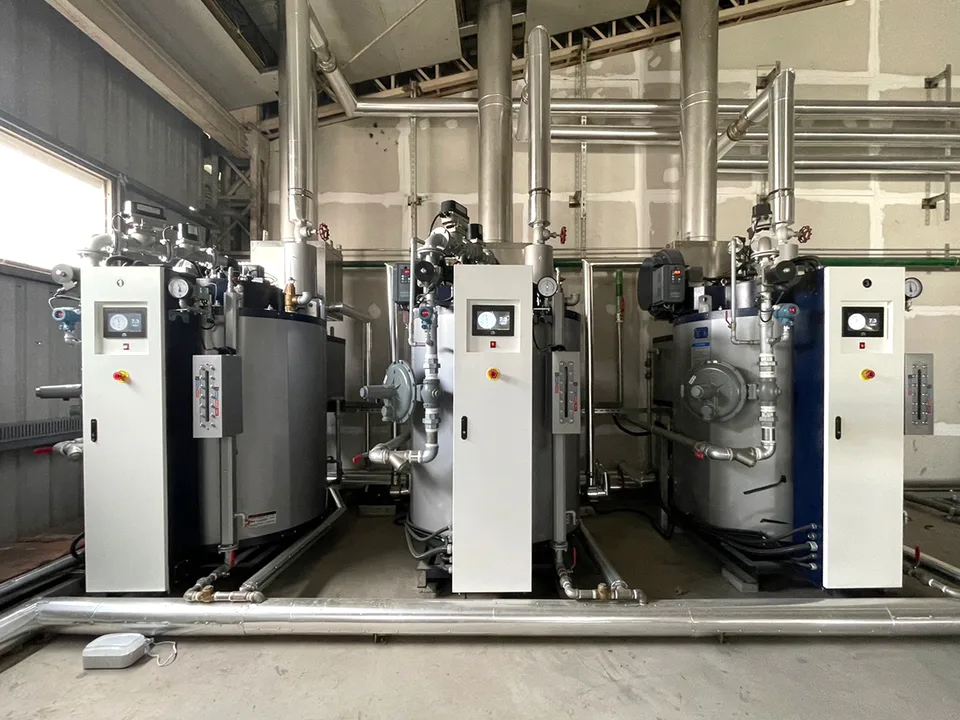
Why choose Chuang Ting once-through steam boiler?