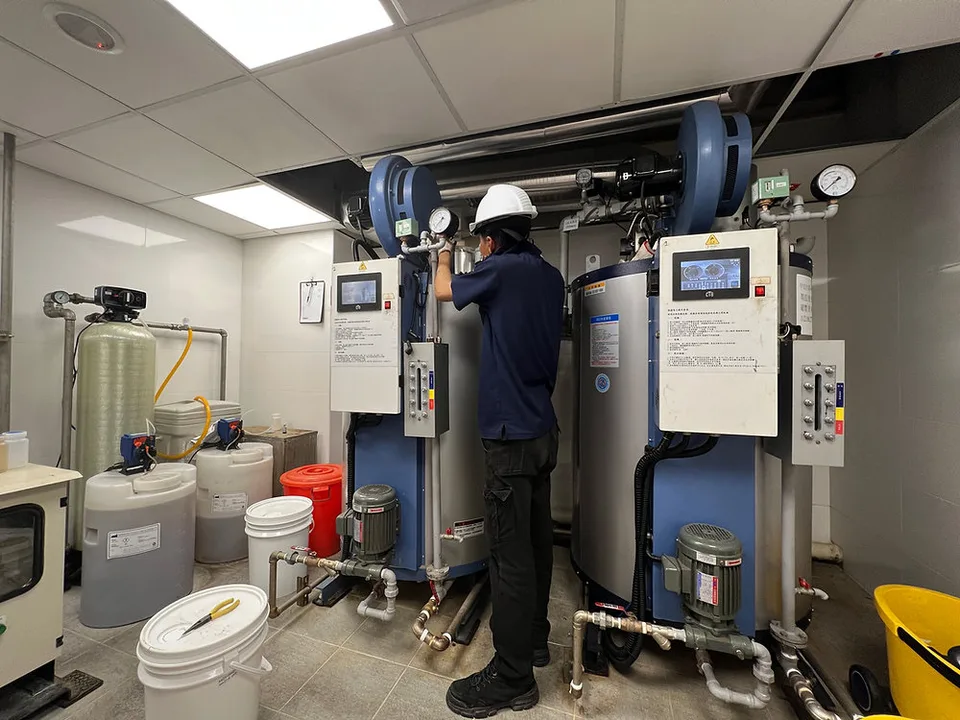
No steam boiler is fault-free throughout its life. Prompt identification and proper handling of problems can prevent more serious incidents and extend service life. This guide introduces seven common faults and practical responses to support safe, efficient operation.
Problem 1: Low Water During Firing
Low water during firing is a critical alarm. Exposed heating surfaces can overheat rapidly, suffer damage and, in severe cases, cause a major incident.
✅ Suggested Actions
- Stop the boiler and combustion immediately to prevent further heating.
- Check feed-pump operation and inspect supply piping for blockage or leakage.
- Check for false readings from the water-level gauge or controller and clean or replace faulty components.
- Do not reignite until the water level is normal and safe conditions have been confirmed.
👉 Regular checks of level controls and feed pumps help prevent low-water conditions.
Problem 2: High Water Level
Excess water is also hazardous. High levels can carry droplets into the steam, affecting steam quality and damaging downstream piping or equipment.
✅ Suggested Actions
- Stop feedwater to prevent the level rising further, following the equipment’s fault procedure.
- Use the drain valve as directed to return the water level to its normal range.
- Inspect the feedwater regulator and repair or replace it if needed.
👉 For food or pharmaceutical processes requiring high-quality steam, accurate level control is especially important to prevent water carryover.
Problem 3: Abnormal Level Control
Level controls monitor the boiler’s water level. Faulty readings can trigger unnecessary shutdowns or conceal a dangerous condition.
✅ Suggested Actions
- Inspect level electrodes for scale and clean or replace them as required.
- Check the control panel and liquid-level control circuit.
- Persistent abnormal level indication requires shutdown and inspection; do not continue operating with an uncertain water level.
👉 Many field faults result from scale on level probes caused by poor water treatment. Effective water management substantially reduces false level readings.
Problem 4: When Is Boiler Blowdown Needed?
Adding water is not enough: blowdown is part of daily boiler management. Dissolved salts and impurities concentrate during operation, increasing scale and conductivity unless controlled.
✅ Suggested Actions
- The article recommends blowdown before daily startup to remove accumulated water and sediment; follow the equipment-specific procedure.
- For continuous operation, the article recommends intermittent blowdown every eight hours, subject to the equipment’s operating procedure.
- Open the blowdown valve gradually according to the operating procedure to avoid pipe shock.
👉 Appropriate blowdown helps extend boiler life and prevent water carryover.
Problem 5: Ignition Failure
Ignition failure is a common service call. Causes may involve fuel, electrical controls or the burner itself.
✅ Suggested Actions
- Check fuel supply and confirm pressure meets specifications.
- Inspect ignition electrodes for carbon deposits and adequate spark.
- Confirm the fan starts. Controls prevent ignition when air pressure is inadequate.
- If these checks are normal, inspect the flame sensor for contamination.
- Check the ignition transformer.
👉 The article recommends burner maintenance approximately every six months to reduce ignition problems; follow the manufacturer’s schedule.
Problem 6: Gas-system Faults
Gas-system faults, including inadequate pressure, leaking pipes or failed regulators, can create serious hazards.
✅ Suggested Actions
- If a gas fault is suspected, stop the boiler and close the main gas valve.
- Use suitable gas-detection equipment to check for leaks.
- Check the gas pressure gauge and regulator.
- If a gas smell persists, evacuate and contact qualified professionals.
👉 Do not operate a boiler while investigating a gas fault. Eliminate the hazard before reignition.
Problem 7: Feedwater Problems
Motors drive essential pumps and fans. A motor fault can stop the entire system.
✅ Suggested Actions
- Check the motor for overheating, unusual noise or vibration.
- Check for air in the pump and have it vented as required.
- Check the motor power supply and voltage stability.
- Worn bearings or burned windings require replacement.
- Maintain a regular service program, including appropriate lubrication and cleaning cooling openings.
- Confirm water is available in the soft-water tank and that pressure and level controls are normal.
👉 Motor faults often relate to unstable power or prolonged overload. Arrange an electrical inspection.
Stay Calm and Follow Procedures
Following the correct troubleshooting process reduces risk and supports a safe return to operation.
- Step 1: remain calm and avoid improvised operation.
- Step 2: stop first, then investigate. Safety comes first.
- Step 3: seek professional support. If the fault remains, contact an engineer or the boiler supplier.
Chuang Ting provides complete repair support and maintenance advice alongside its equipment. Stable, safe operation is essential to long-term production value.
👉 Contact our service team if you are experiencing a steam boiler problem.