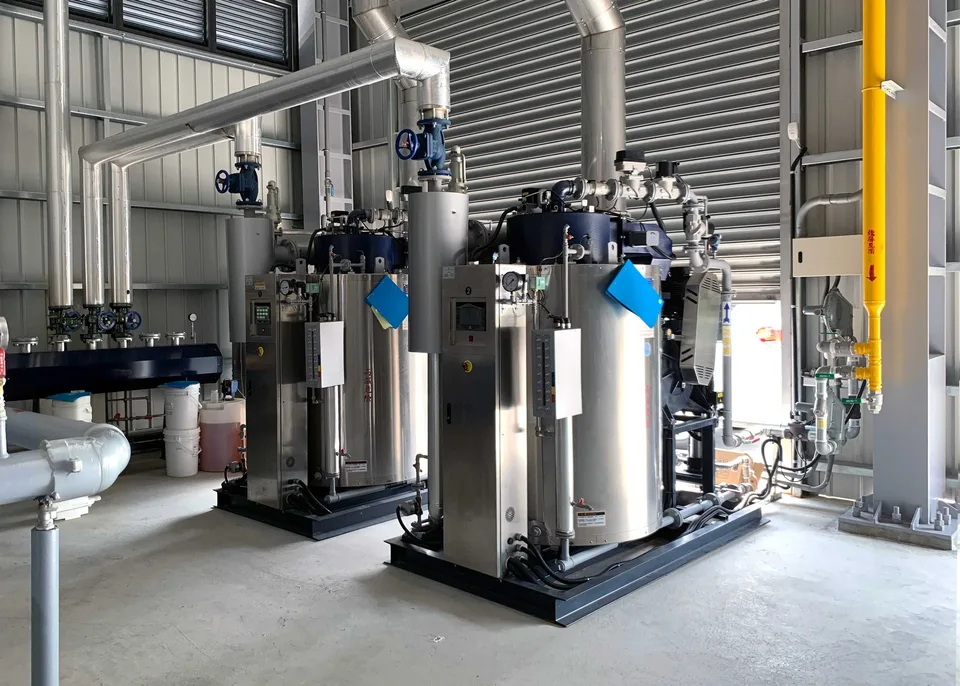
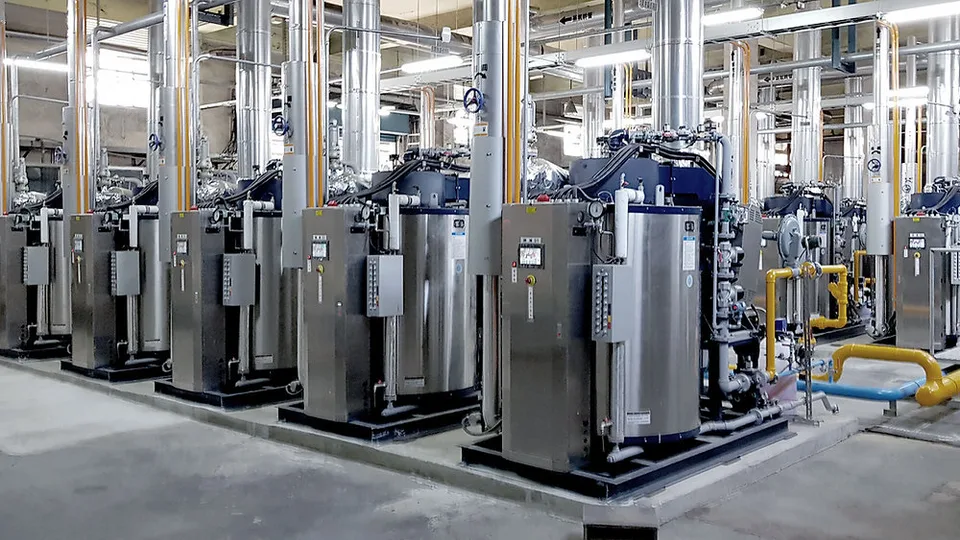
Once-through steam boilers offer rapid startup and efficient operation in food, chemical, healthcare, electronics and catering applications. This article explains their principles, advantages, limitations and typical uses to support equipment selection.
How It Works: Rapid Conversion of Water to Steam
Once-through boilers heat a small water volume rapidly for immediate use, instead of warming a large stored volume. The process includes:
Feedwater System
A feed pump delivers a steady flow of water to the heating tubes.
Heat Transfer in Narrow Tubes
Water flows through narrow pressure-rated heat-transfer tubes heated by the burner, rapidly reaching boiling conditions.
Immediate Steam Delivery
Water converts to pressurized steam as it passes through the tubes, supplying the process without a separate large steam-storage vessel or prolonged warm-up.
💡 This direct-flow design shortens startup, improves energy performance and reduces stored water volume, supporting efficient plant management.
Why Choose a Once-through Boiler?
Fast Startup
Some conventional boilers need 30–60 minutes to establish steam supply, while suitable once-through models can reach operating conditions in about five minutes. This benefits intermittent food and chemical processes.
High Thermal Efficiency and Lower Fuel Use
Rapid heat transfer supports efficiency above 90% in many models. Some systems with condensing heat recovery exceed 99% on a lower-heating-value basis, reducing fuel use.
Compact, Space-saving Construction
Once-through boilers avoid a large internal water reservoir and steam drum. Their compact body can be around one-third the size of conventional equipment, offering flexible installation in urban factories and central kitchens.
Automated, Stable Operation with Regulatory Exemptions Where Applicable
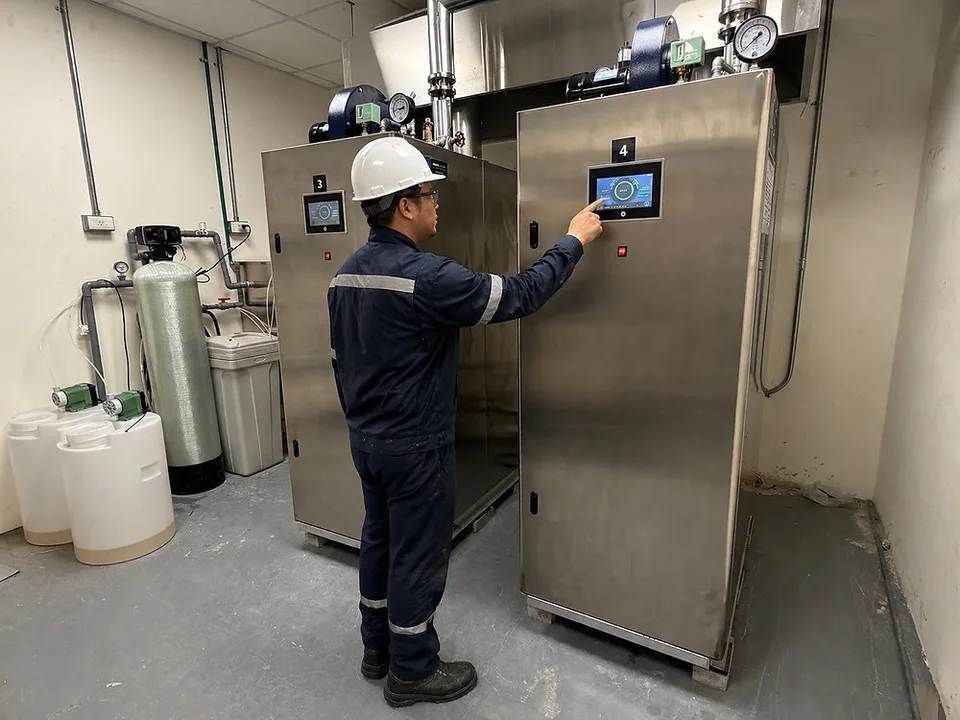
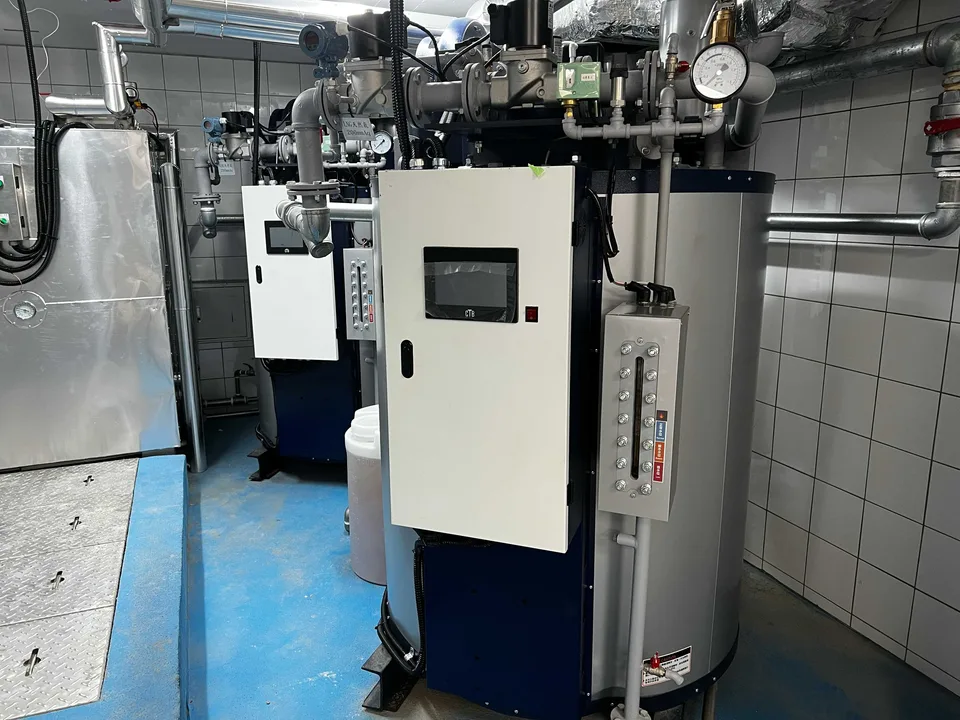
Many once-through boilers automatically modulate combustion and monitor pressure and water level. Safety devices include pressure relief and low-water shutdown. Regulatory exemptions depend on equipment classification and local requirements; operator training and safe management remain essential.
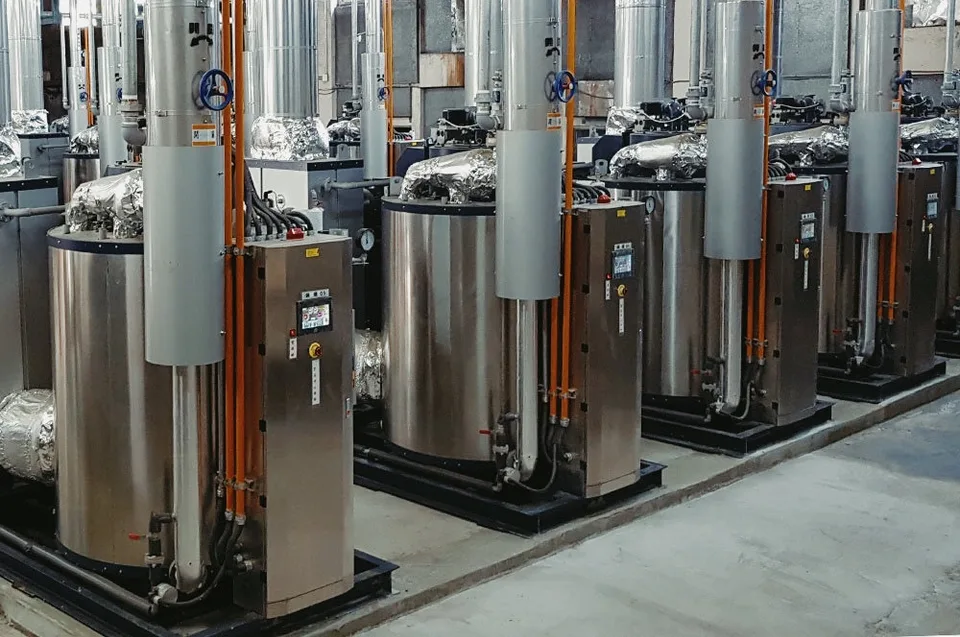
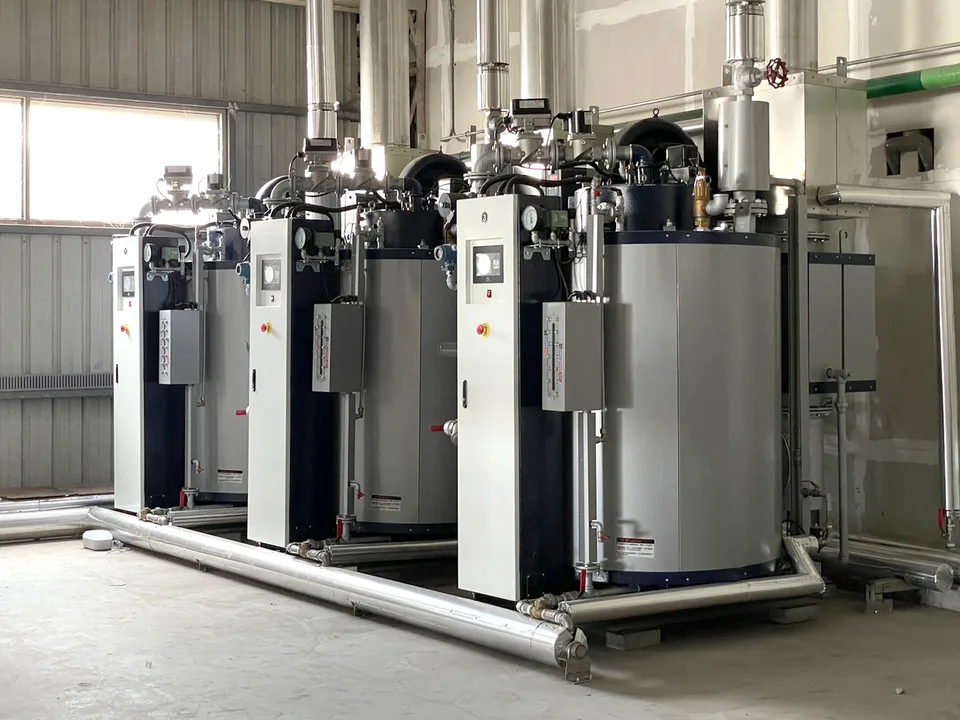
Modular Expansion with Parallel Units
Parallel units can meet larger demand while allowing individual maintenance and adjusting the number of operating boilers to production needs.
Limitations to Consider
- Limited Output per Unit
Many individual once-through units produce approximately 2,000–3,000 kg/hr, so larger factories may require parallel boilers.
- Higher Initial Investment
Advanced materials and controls can make once-through boilers more expensive initially. Fuel savings and emissions benefits may still provide an attractive long-term return.
- Demanding Water-quality Requirements
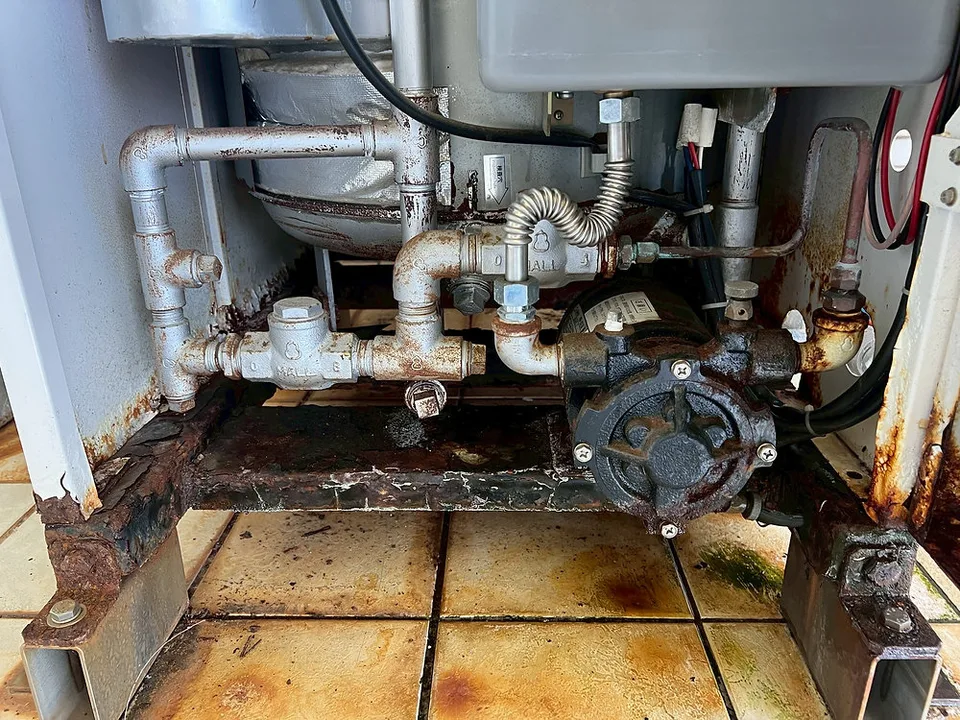
Untreated hard water accelerates scale formation. Budget for suitable water treatment and maintenance to preserve system life and performance.
Main Applications
Food Processing
Steamed buns, rice, dim sum, meatballs, rice dumplings and sterilization processes require substantial steam. Fast startup and stable temperature make once-through boilers useful in central kitchens and food factories.
Textile Dyeing and Printing
Textile dyeing and finishing need stable steam pressure for consistent fabric quality. Compact once-through units can fit both existing and new plants.
Medical Equipment
Autoclaves and medical equipment require suitable steam purity and stable pressure. Some clean-steam arrangements use stainless-steel wetted components to meet application requirements.
Chemical and Electronics Industries
Laboratories, smaller chemical plants and PCB processes need precise temperature and pressure. Once-through boilers provide responsive, stable steam.
Catering and Beverage Production
Beverage chains and central kitchens use once-through boilers for on-demand steam in cleaning, sanitizing and cooking.
Future Trends: Intelligent Controls and Sustainability
Industrial automation is driving new boiler capabilities, including:
✅ Remote monitoring: IoT systems transmit operating data for fault warnings and energy analysis.
✅ Hydrogen and biomass compatibility: some newer models support hydrogen blending or hydrogen firing as part of decarbonization efforts.
✅ Enhanced latent heat recovery: condensing economizers can produce efficiencies above 100% when expressed on a lower-heating-value basis.
An Efficient Steam-generation Option Worth Evaluating
Once-through boilers combine fast response, efficiency and safety features across many applications. Proper water management and servicing support long life and lower costs. Chuang Ting provides planning, installation and maintenance for complete steam solutions. Contact us to discuss a system matched to your needs.