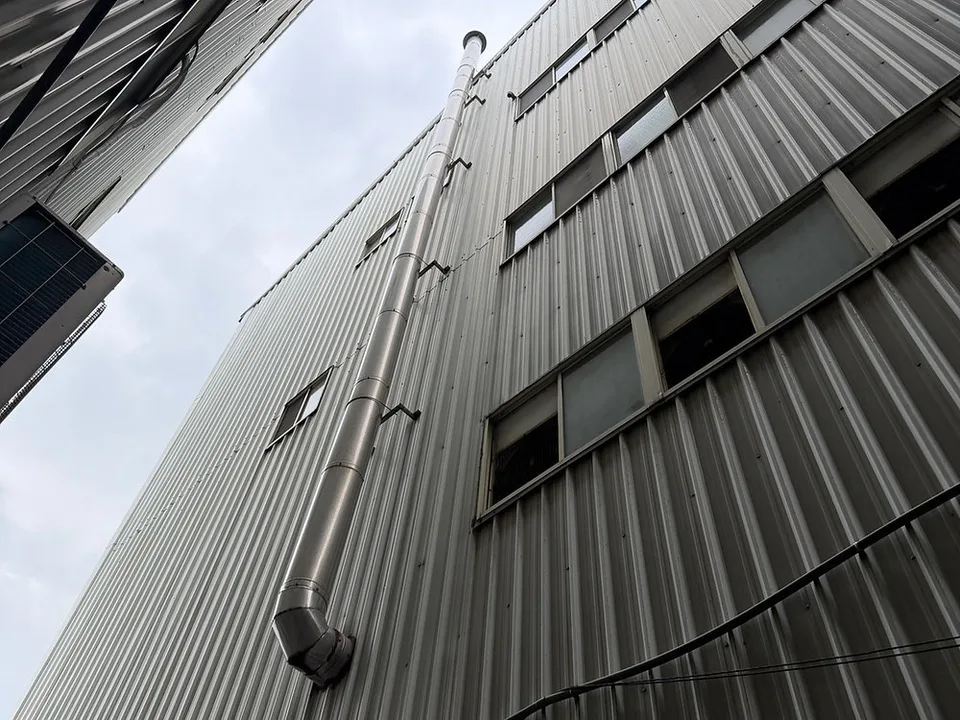
An important point worth stating clearly:
Ignition failures, incomplete combustion and abnormal furnace temperatures may originate in the flue rather than the boiler itself.
Ignition electrodes replaced, flame sensors cleaned, dampers adjusted and the air-fuel ratio checked — yet the boiler still locks out?
The work may be addressing symptoms while leaving the root cause untouched.
Start with One Principle
Boiler combustion involves more than the moment of ignition.
It is a continuous, dynamic process supported by three factors:
1. Fuel
2. Air
3. Exhaust flow — the draft provided by the boiler flue
Fuel and air receive attention, while the third factor is often overlooked.
Restricted exhaust flow causes unstable combustion.
Why Can a Flue Problem Prevent Ignition?
Think of it this way:
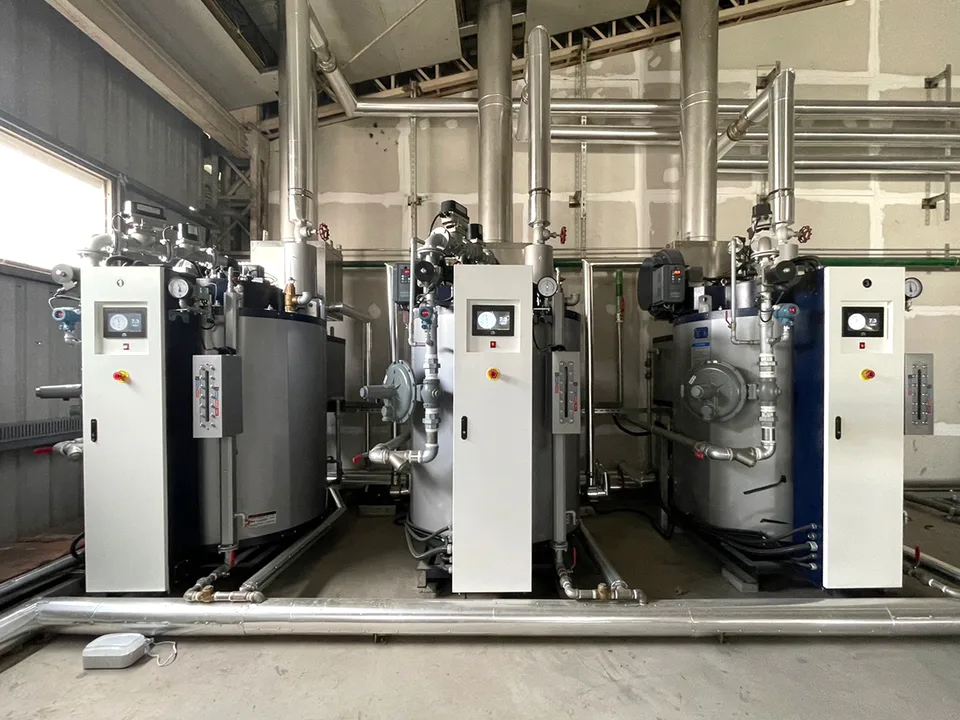
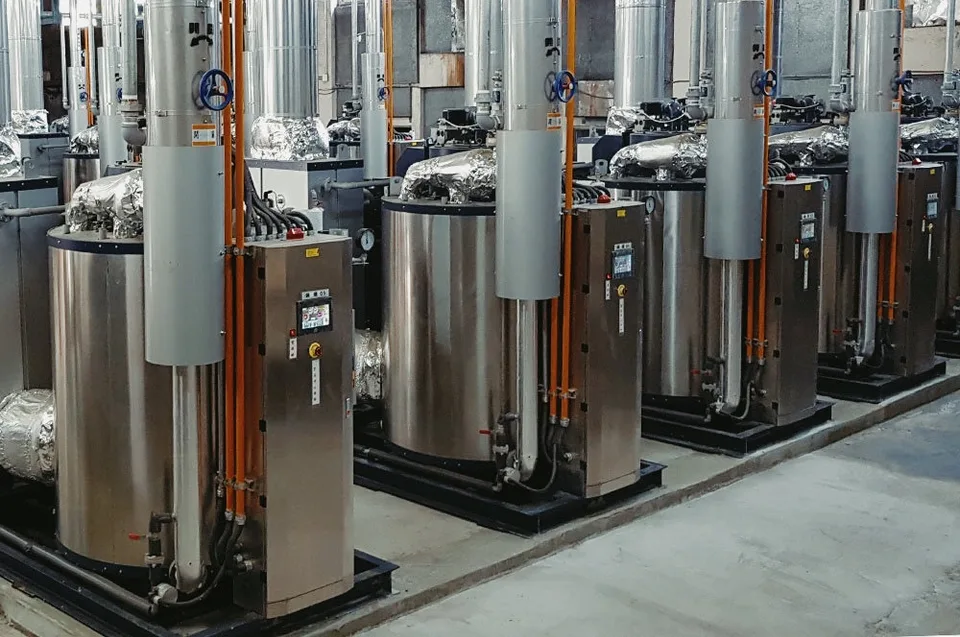
The flue is the boiler’s exhaust pathway. Combustion depends on it functioning correctly.
Restricting exhaust and then expecting stable combustion is like asking someone to run while unable to breathe freely.
Once-through boilers respond quickly and efficiently, making appropriate exhaust conditions especially important.
Unstable draft can immediately affect combustion.
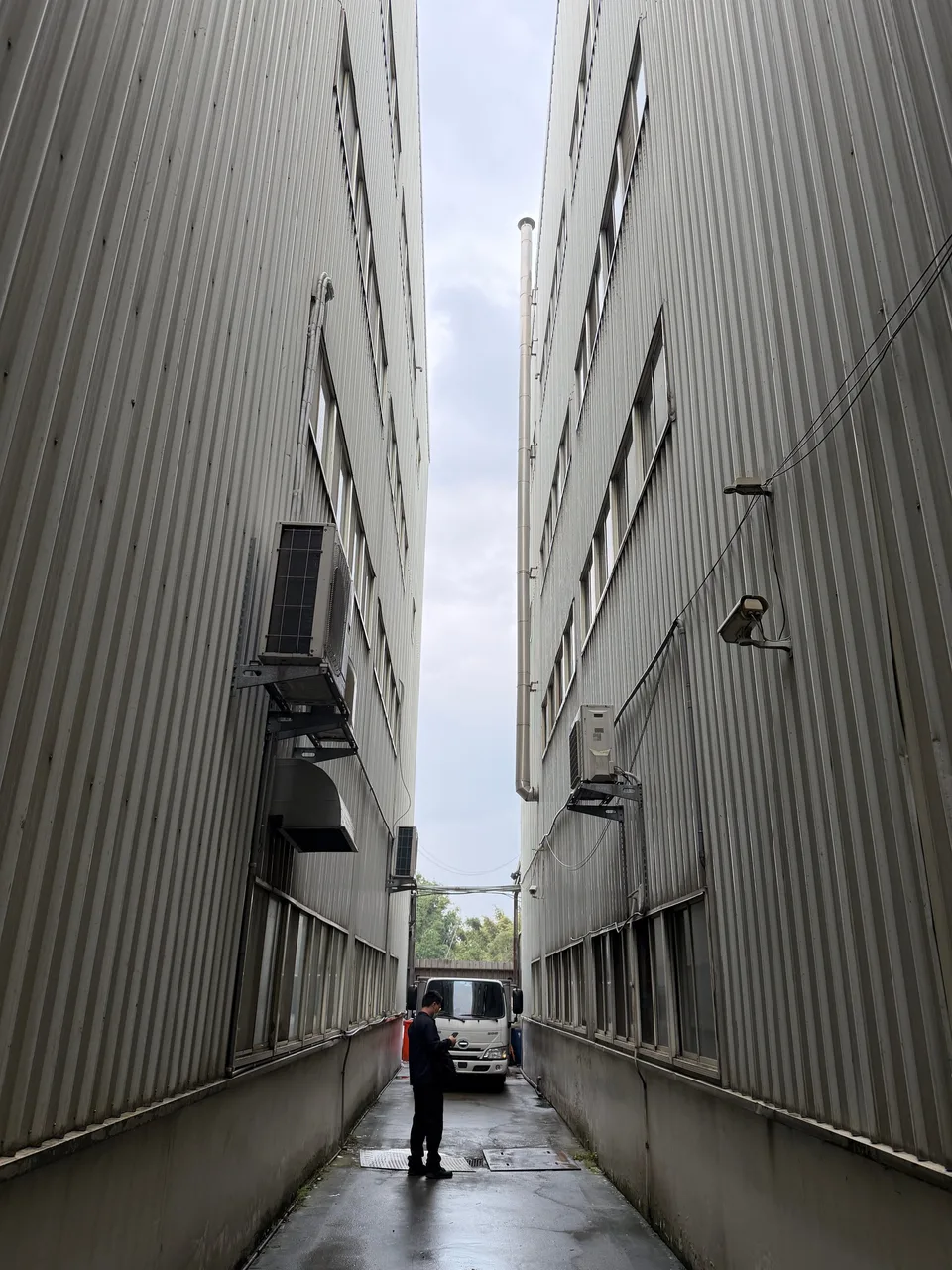
Four Common Flue-design Problems
These four mistakes are common in field installations and easy to overlook.
1. Insufficient Flue Height — Sometimes Less Than Six Meters or Only Extended Through a Wall
A common assumption on site is:
“The exhaust reaches outside, so it should be fine, right?”
That overlooked factor may be the cause.
Insufficient flue height can cause:
- Insufficient thermal buoyancy and draft
- More frequent failure during cold starts
- Wind forces exhaust back toward the system.
The result may be:
- Ignition failure
- Ignition followed by flame loss
- Incomplete combustion
- Failure to reach the required furnace temperature
Cold and windy conditions can make the problem worse.
2. Long Horizontal Flue Runs and Too Many Elbows
This is an easily overlooked hazard.
Every horizontal run and elbow adds resistance and reduces available draft.
A few extra meters of pipe may seem minor, but they add resistance the boiler must overcome.
Eventually, you may see:
- Elongated or drifting flames
- Unstable flame detection
- Elevated CO
- Combustion that cannot be tuned consistently
Replacing components only delays the underlying repair.
3. Basement Exhaust Using Unsuitable Ducts or Fans
Basements make exhaust routing more difficult, yet some installations use:
- An initial horizontal duct run
- Connecting an ordinary ventilation fan
- Then discharging outdoors
The underlying issue is:
- A ventilation fan not designed for boiler exhaust
- Excessive extraction disrupts furnace pressure.
- Too little extraction allows exhaust to accumulate or flow backward.
Other basement exhaust fans can depressurize the room, reducing the boiler’s available combustion air.
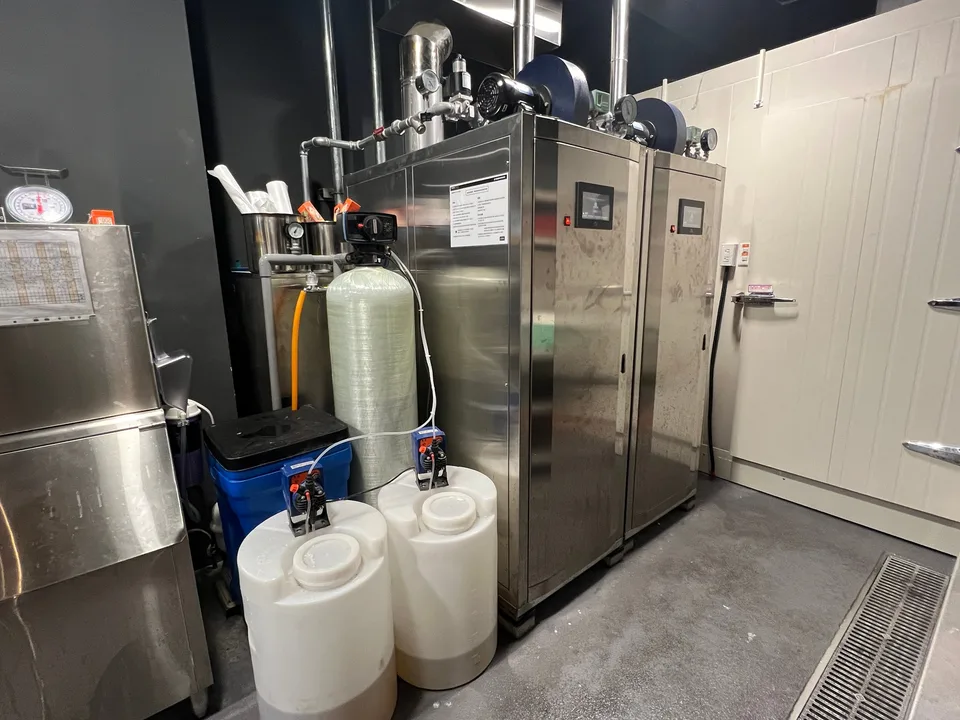
4. Outlet Below the Required Roof Clearance and Exposed to Turbulence
This occurs frequently.
The exhaust exits into a turbulent zone near the roof.
This results in:
- Wind-induced backflow
- Exhaust forced backward
- Exhaust drawn into nearby air intakes or door openings
Typical symptoms include:
- Low O₂
- Unstable CO readings
- Intermittent faults that are difficult to reproduce
Replacing components alone will not solve this condition.
Symptoms That Can Indicate a Flue Problem
Use this quick comparison:
✅ Repeated ignition failures
✅ Worse behavior in cold or windy weather
✅ Abnormal temperature trends or slow heating
✅ High CO during combustion analysis
✅ The same boiler works normally at another location
Several matching symptoms should prompt a thorough flue assessment.
Chuang Ting’s Practical Flue Inspection Checklist
Start with these visible checks before detailed calculations.
Exhaust Route
- Is the horizontal run too long?
- Are there too many elbows?
- Are there abrupt reductions in diameter?
Height and Outlet Position
- Does the outlet extend appropriately above the roof?
- Is the outlet obstructed by a parapet or nearby equipment?
- Are air intakes, doors or windows nearby?
Basement Installations
- Is the exhaust equipment rated for boiler service?
- Is the exhaust system interlocked with the burner as required?
- Is the room persistently under negative pressure?
The Most Important Check
👉 Measure O₂, CO and flue-gas temperature. Combustion analysis helps identify draft and exhaust problems.
A Direct Reminder
The flue is an integral part of the boiler system.
Even an efficient once-through boiler cannot burn steadily with unsuitable exhaust design.
Ignition, combustion and temperature problems are symptoms of the underlying condition.
Advice for Boiler-room Planning and Upgrades
Compare boiler prices,
but design the flue through engineering, not guesswork.
A faulty component can be repaired; a poorly designed flue causes recurring problems.
If you are experiencing:
- Repeated Once-through Boiler Ignition Failures
- Persistent combustion problems
- Repeated component replacement without improvement
Stop replacing parts indiscriminately and inspect the flue system.